Citizen committee reviews Tampa’s constitution
The Charter Review Advisory Commission will recommend changes to place on the March 2027 ballot.
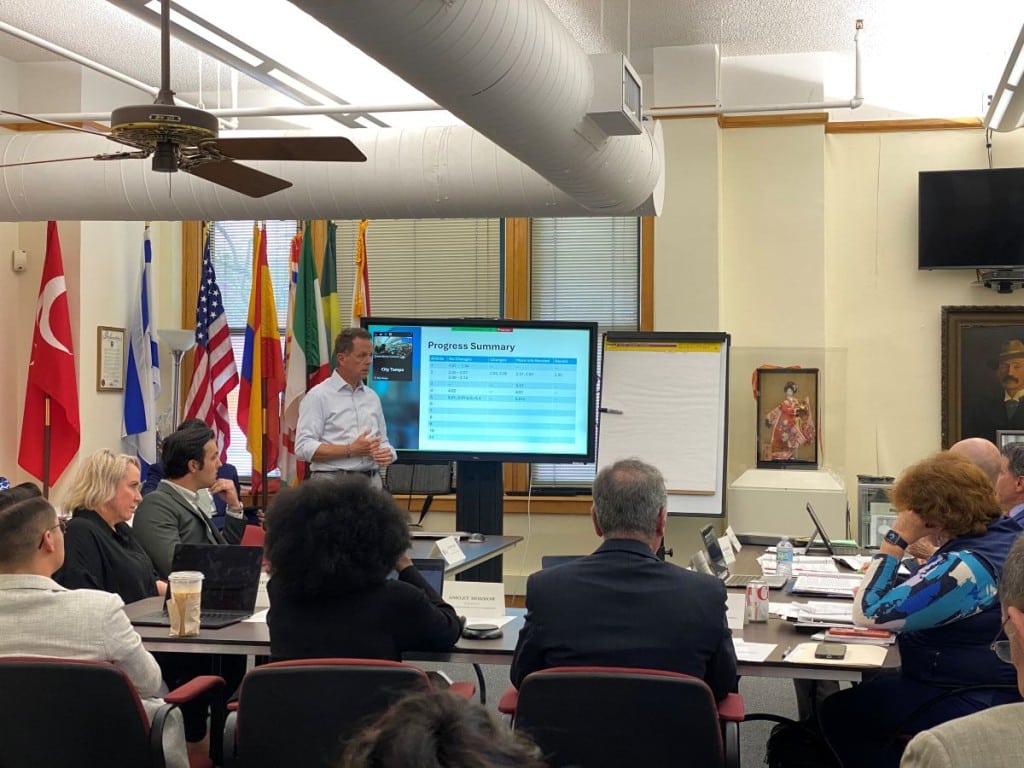
Inside Tampa’s Old City Hall, a Plan Hillsborough staffer offered a striking projection: over the next nine years, the city’s population will swell by another 15 percent, to about 475,000. Most of the arrivals will land in central Tampa.
In the urban core, one in six residents will be new to the city. And the rules for how the municipal government operates in the city they’ll be moving to haven’t kept pace. While Tampa has seen a decade of rapid growth and change, the city’s current charter was adopted 50 years ago. Like its industrial waterfront, the city has outgrown its governing framework, and now it’s up for review.
Enter the Charter Review Advisory Commission, a group of residents appointed by the City Council and mayor to review the charter, discuss and debate how the city should function at its most fundamental level, and recommend changes.
“It can be awkward for elected officials to rewrite the rules that govern them,” says Stephen Benson, a commission member appointed by Council member Guido Maniscalco. “The review process asks independent residents to consider what’s working, what’s not, and how the city’s government should evolve as Tampa grows.”
By September, the commission will make recommendations to the City Council on what, if anything, should change in the charter. The City Council will then approve or reject the recommendations, and the mayor will sign or veto. Each proposed amendment that makes it through the process will appear as a referendum on the March 2027 ballot.
The process is a rare opportunity for citizen community leaders to provide direct input on how the city is run. But what’s really under review isn’t just language, it’s power.
Power and friction
In 2023, proposed charter amendments focused on the balance of power between the City Council, the city’s legislative branch, and the mayor and administration, the executive branch. The City Council voted to put five charter amendments on the ballot. Mayor Jane Castor vetoed all five. A City Council supermajority overrode four of the five vetoes. The disputes centered on increased council control over city departments and police oversight. The mayoral veto that survived the override vote was Tampa’s first in over 30 years. Unlike the current process, there was no Charter Review Advisory Commission in 2023. The City Council proposed the amendments.
“There should be a natural rub between the two branches,” says Garrett Greco, an appointee of Council member Alan Clendenin. “Too much tension is bad, but too little is also bad.”
Amendments approved in 2023 set a limit of four consecutive terms for City Council members and require the charter review process every eight years, instead of every 10.
This year, the City Council has sent the Charter Review Commission issues such as additional consideration of mayoral term limits, the extent of City Council’s independent investigative power, and clarification of the role of the city attorney, and whether they are ultimately accountable to the mayor or council. Another question is whether the charter should establish arbitration protocols for disputes between the branches.
Bobby Creighton, an appointee of Council member Lynn Hurtak, felt the city attorney should not represent the council and the mayor’s administration when only the administration evaluates the attorney’s job performance.
“It’s an equity issue,” Creighton says. “The City Council needs its own independent attorney.”
Growth’s impact
The city’s rapid growth has sparked debate over whether the City Council should have more than seven members. Compared to cities of similar population, Tampa is below the national average of nine city council seats but right around the average for population per council seat (58,000), according to data provided by Plan Hillsborough, the local planning agency and the entity tasked with redrawing the city council districts boundaries every four years.
There is no standard rule of thumb for how municipal governing bodies are organized. More council members would mean more voices and representation, but potentially more gridlock. The advisory commission is also reviewing residency requirements for municipal employees, a question that touches on housing affordability and whether city residency should trump the worthiness of a qualified candidate who lives outside the city limits.
The decision-makers
For all its work, the commission doesn’t actually decide anything. The City Council puts amendments on the ballot. The mayor can veto their decision, and a council supermajority can override a veto.
The voters have the final say and, historically, turnout in Tampa’s springtime municipal elections hovers around 15 percent, according to the Hillsborough County Supervisor of Elections. By comparison, countywide turnout was 79 percent for the 2024 general election, when the presidency was on the ballot.
The Spring 2027 ballot will also include a mayoral election that may well set the city’s direction for the next decade, even if only a small portion of city voters participate.
“We really need more people to get involved civically and to pay attention to elections,” Greco says.
Community ties
The Charter Review Advisory Commission’s members have deep community ties and involvement.
District 5 Council member Naya Young‘s appointee, Ashley Morrow, is a local historian and photographer, a fifth-generation Tampanian, and a fixture at Tampa City Council meetings, where she starts by saying, “My name is Ashley, and I will be sharing Tampa’s Black history.”
Her presence is a reminder that the charter isn’t just about structure — it’s about who that structure serves.
“We see what’s happened nationally with constitutional challenges. I’m here to protect the interests of the people in my community—East Tampa—in our city ordinances,” she says.
Garrett Greco is also a Tampa legacy. His grandfather, Dick Greco Jr., was mayor twice. Greco is also the creator and host of the Tampa Bay Developer podcast, which features local leaders, movers, and shakers discussing development and related topics like transit, planning and zoning, and urban design.
Bobby Creighton is a community advocate and Vice President of the Ybor Heights Neighborhood Association. He credits former City Council member Jan Platt and her colleagues in 1975 with detangling the charter’s complex legal language and making it understandable for average citizens. This time around, he’d like to see it reorganized.
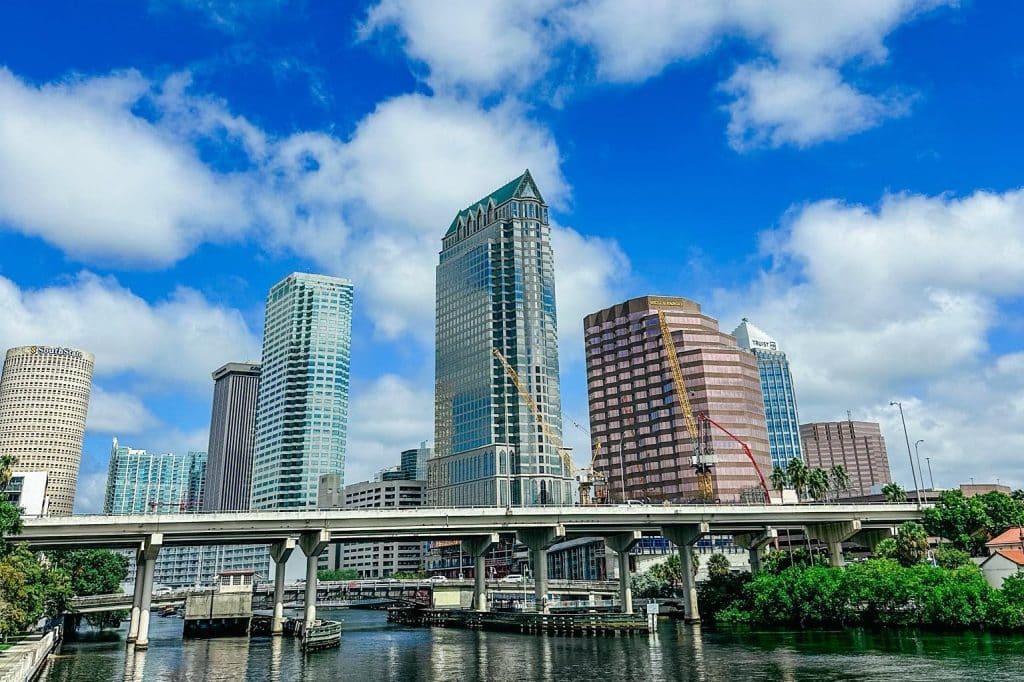
Amid construction dust and the mirrored highrise façades that dot the city center, the most consequential civic project in Tampa this year may be a group of people meeting twice a month under fluorescent lights to debate the document that sets out the rules for city government.
For more information, including meeting dates and agendas, go to Charter Review Commission
Author

Related Articles
Affirming Fatherhood Conference offers insights into challenges facing today’s families
REACHUP says it wants to let fathers know that when they’re engaged, the outcomes in their families are much better.
ULI Tampa Bay launches two new leadership events
Two new ULI Tampa Bay events will bring together land-use and real estate professionals for regional tours, networking, and leadership development.

Art Everywhere launches in Pinellas this fall
Art Everywhere awarded close to 30 arts organizations a combined $350,000 in grants for events that can establish Pinellas County as a cultural destination.