Child Abuse Prevention Month spotlights year-round efforts to support parents, protect children
Bay Area hospital systems, community nonprofits have array of research-backed programs and resources to prevent child abuse.
Tampa General Hospital pediatrician Dr. Carol Lilly investigates suspected child abuse. She looks for signs such as bruises, burns, bite marks, black eyes, broken bones, injuries to the sides of the ears, eyelids, and eyes, and whether they match up with the caregiver’s explanation.
Lilly, State Director of the Florida Department of Health Child Protection Team, says a large number of abuse victims are under age 4. Many are babies who haven’t reached their first birthday.
Injuries to babies, in particular, are a red flag of possible abuse.
“It’s harder to get an injury if you’re not able to run or walk or play and hurt yourself,’’ says Lilly, who is also on the faculty of the University of South Florida Department of Pediatrics.
Investigating child abuse is grim work, but it’s finally being done. For much of the nation’s history, child abuse was a dark secret kept within families. The AMA Journal of Ethics reports that it was the publication in 1962 of the groundbreaking medical study “The Battered-Child Syndrome,” by Dr. C. Henry Kempe and colleagues, that started an open national conversation on child abuse and got the attention of medical professionals and legal authorities.
Today, some laws require a person to report suspected child abuse, and there’s a National Child Abuse Hotline (1-800-422-4453) for reporting it. Each April, National Child Abuse Prevention Month raises awareness about the issue and the organizations across the country working to root out and prevent physical and sexual abuse and child neglect. In the Tampa Bay area, those organizations include the state Division of Children and Families, which investigates reports of abuse and neglect; Mary Lee’s House, which works to heal abused children through medical, legal and mental health services; the Crisis Center of Tampa Bay, which offers support for victims of child abuse, sexual assault and family violence; and Healthy Start Coalition, which focuses on the health of mothers and children.
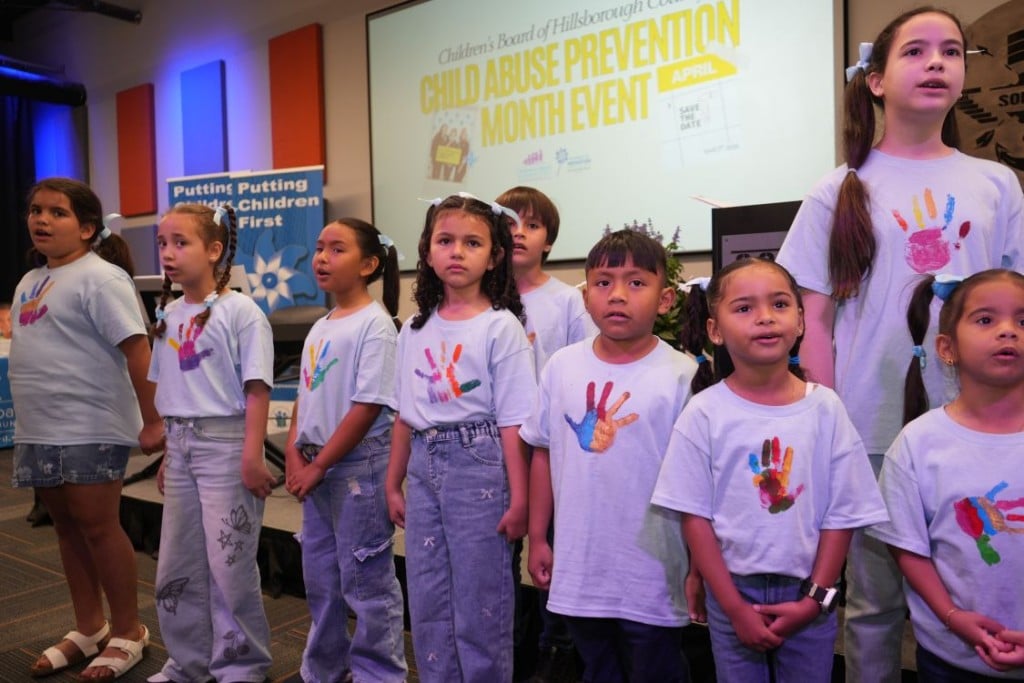
The Children’s Board of Hillsborough County helps fund many of these programs and brings them together at an annual National Child Abuse Prevention Month event. This year’s event on April 3rd featured speakers from programs working on solutions to parental stress, a significant risk factor for child abuse
Resources available
Richelle Anderson is a licensed clinical social worker at St. Joseph’s Women’s & Children’s Hospital and manager of its Supporting Motherhood and More support group. Speaking at the April event, Anderson says the first year after birth is often described as the happiest time of a woman’s life. But for many mothers, it is a time of emotional challenges and mood disorders, including postpartum depression and even post-traumatic stress disorder.
St. Joseph’s established Supporting Motherhood and More to address the issue. There are support groups for new mothers to connect. They also receive up to 16 free therapy sessions with a therapist who specializes in perinatal issues. Anderson says the therapy sessions are free because the program is built on the belief “that no mother should suffer alone and no family should face the financial burden or barrier to get the help that they need.” She says research consistently shows that when mothers get treatment for perinatal mental health disorders and anxiety disorders, child abuse and neglect decrease dramatically.
“When we invest in maternal mental health, we’re not just protecting the mother, we’re protecting an entire family,’’ Anderson says.
USF Health has two programs for parents who struggle with substance abuse. PEDI (Promoting Early Developmental Interventions) treats children, and PRISM (Promoting Recovery and Integrated Support for Mental Health) treats parents. The clinics work in partnership with the Healthy Start Coalition.
“Substance use in and of itself is not child abuse,’’ PEDI Medical Director Dr. Tanner Wright says at the April 3 event. “Because what I see every day is that families are carrying multiple unaddressed stressors.’’
They love their children but are trying to cope with conditions “that would challenge any one of us,” he says.
Speaking after the event, Wright says USF Health brings pediatrics, high-risk obstetrics or MFMs, psychiatry, psychology, and addiction medicine together in one place.
“It’s all of the services that commonly, we find, don’t want to take care of pregnant or parenting people who have substance use,” he says. “So we decided, let’s put that all together, bring all the champions to the table, provide the best of services to really support them through the pregnancy and early childhood period.”
Champions for Children is one of the only nonprofits in Florida to focus solely on preventing abuse and neglect before they start. It runs 12 programs focused on developing a healthy bond between parents and their children.
It offers breastfeeding support at more than 10 locations in Hillsborough and three in Pinellas, and holds developmental playgroups for children to socialize at several community centers
The organization offers expecting parents safe baby classes that educate on topics such as safe sleep habits for infants, avoiding distracted parenting, choosing responsible babysitters, and preventing shaken baby syndrome.
Champions for Children Chief Program Officer Nikki Daniels says in her career as a therapist, she’s worked with kids who had been sexually abused, domestic violence and sexual assault victims, and military veterans with post-traumatic stress disorder.
“So for me, getting to work here and helping prevent those negative outcomes I saw as a result of abuse, I could not think of a better way to spend my time,’’ she says.
Daniels is excited about the community movement and group PACEs Hillsborough (Positive and Adverse Childhood Experiences). It’s based on a treatment framework called Healthy Outcomes from Positive Experiences (HOPE) that was developed at Tufts Medical Center in Boston. Daniels says HOPE is based on research showing positive experiences growing up make an impact that can undo the negative impact of adverse childhood experiences like child abuse.
“If enough good things are in (a) child’s life, they’re not likely to suffer the negative outcomes from the bad stuff,’’ she says.
PACEs Hillsborough is working to educate the community about the research and how it can help people suffering the impact of abuse. That effort includes its upcoming fourth annual conference, “The Power of Positive Experiences,” scheduled from 8:30 a.m. to 4:45 p.m. on May 15 at the Hillsborough College Trinkle Center in Plant City. The keynote speaker is Dr. Robert Sege, Director of the HOPE National Research Center and Professor of Medicine and Pediatrics at Tufts University
“There are seven experiences on the list right now that have been shown to have had positive impacts into adulthood,’’ Daniels says, “and one of them makes total sense, that you have two non-parent adults who care about you. So a teacher, a coach, your neighbor, somebody at church. Someone who is not your parent – who is supposed to love you anyway – who actually takes an interest and cares about you.’’
As PACEs Hillsborough’s website declares, “Communities can be places where traumatic experiences occur, but they can also be a source of protection, health promotion, and support.’’
For more information on support services for children and families, go to Children’s Board and Champions for Children. For more information on PACEs Hillsborough and the upcoming conference, go to PACEs Hillsborough.
Author
Related Articles
Comprehensive approach to improving early literacy producing results
Thrive by Five is a collaborative effort to reach families and children and improve school readiness. The goal is to have 65 percent of children ready for kindergarten by 2030.
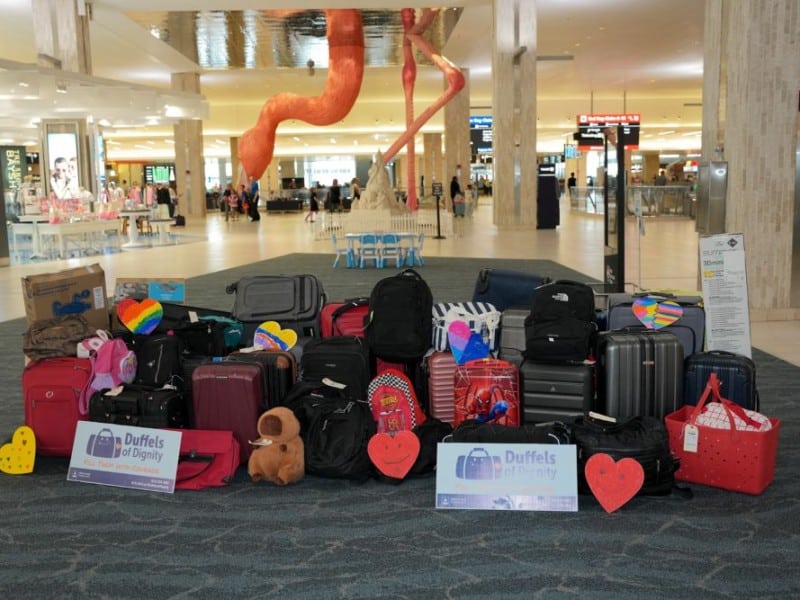
Hillsborough Children’s Services, TPA turn unclaimed luggage into Duffels of Dignity
Tampa International Airport has partnered with Hillsborough County Children’s Services’ Duffels of Dignity program to donate unclaimed luggage to foster youth and at-risk children.

Partner Partner Content JWB’s Turbo Babies supports parents as their child’s first and best teachers
Turbo Babies offers families free “Pit Crew” bags filled with books, toys, and brain-building activities because 80 percent of brain growth occurs in the first three years of life.