History Center Duckwall Lecture celebrates Ybor’s 140th with Gary Mormino
Tampa Bay History Center Duckwall Lecture features historian, author Gary Mormino for Ybor City’s 140th anniversary.
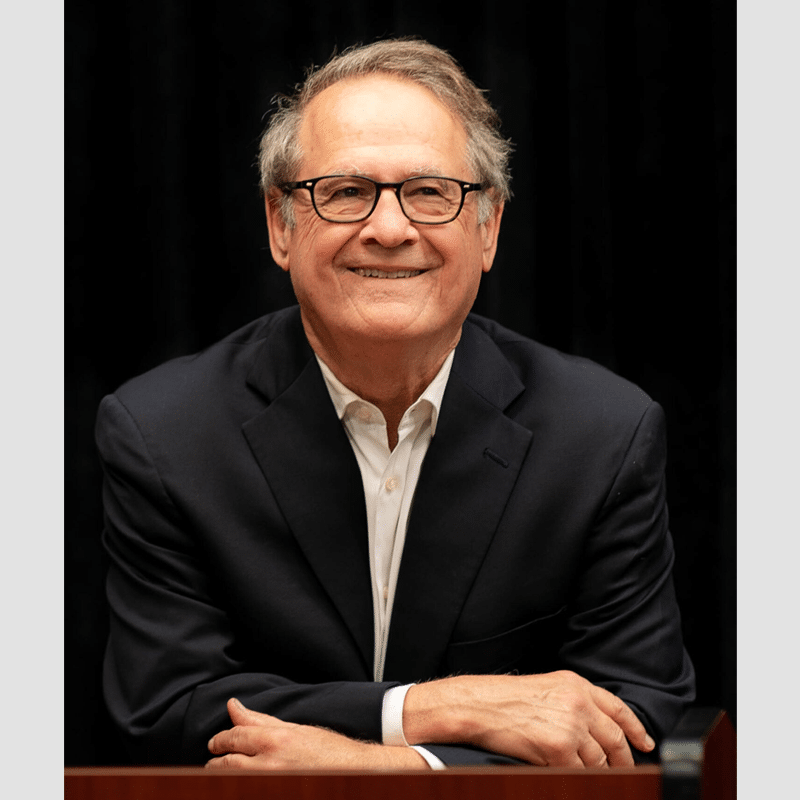
Gary Mormino, an authority on the history of Ybor City and West Tampa, says audiences love the stories of the mutual aid societies established by the Italians, Cubans, and Spaniards who came to work in the city’s booming cigar industry. Parents would sign up their children for a lifetime of free medical care as soon as they were born.
“They were cradle-to-grave institutions. Most of the clubs had a clause that you paid a cemetery fee, and you got a plot for you and your family. And you were guaranteed a brass band, for instance, at the Italian Club,’’ says Mormino, a history professor at the University of South Florida and author of six books on Florida history.
To mark Ybor City’s 140th anniversary, Mormino will discuss Ybor history and share stories of its colorful characters during the 17th annual Frank E. Duckwall Foundation Lecture, at 7:30 p.m. April 22 at the Tampa Bay History Center in downtown Tampa.
The colorful characters include Nick Nuccio, who was born in Sicily, came to Tampa as a boy in the 1890s, and served two terms as Tampa’s mayor in the 1950s and 60s.
“What an amazing figure,’’ Mormino says. “You could see he was a people person.’’
When Nuccio was mayor, he would sit in a cafe across the street from the Italian Club every morning between 7 and 9 to greet citizens.
“Anyone who wanted to talk to the mayor would go there,” Mormino says. “You would stand in line. But that was the kind of people person he was.’’
Decades after Nuccio left office, Mormino interviewed him many times.
“When I would interview him, he would always put on a suit, and the suit would just be ragged, moth-eaten,” Mormino says. “But he had a stature that he wanted to maintain.’’
Mormino also tells of a man he interviewed who collected and handed out bribes during the years when Tampa was known for rampant corruption, most of it centered around bolita, an illegal gambling very similar to the Florida Lotto. He told Mormino he would make yearly trips to Tallahassee to pay off “various parties.’’
Mormino, whose grandparents emigrated from Sicily, first arrived in Tampa in the late 1970s and was amazed at the sights and the history of Ybor City.
“The fact that you have these distinct groups … Sicilians, Cubans – white and black – Spaniards from different areas. Then you have a small Jewish population. What an absolutely fascinating community, so I immediately started going down every Saturday morning to Ybor City,” he says.
He was introduced to many of the key figures in Ybor and West Tampa by the late Tony Pizzo, a businessman who took it on himself to research and tell the unique story of Tampa’s history.
Both Pizzo and Nuccio have been immortalized in bronze statues in Ybor Centennial Park.
Mormino says a friend at the University of Florida told him he had to meet Pizzo.
“I drove out to his place on Davis Islands, and he really became in a lot of ways my step-father. He couldn’t have been nicer. He clearly saw that I had potential, I think,’’ Mormino says.
He would go to Pizzo’s house every other Saturday morning and look through the research Pizzo had compiled. They were co-authors of “Tampa, the Treasure City.”
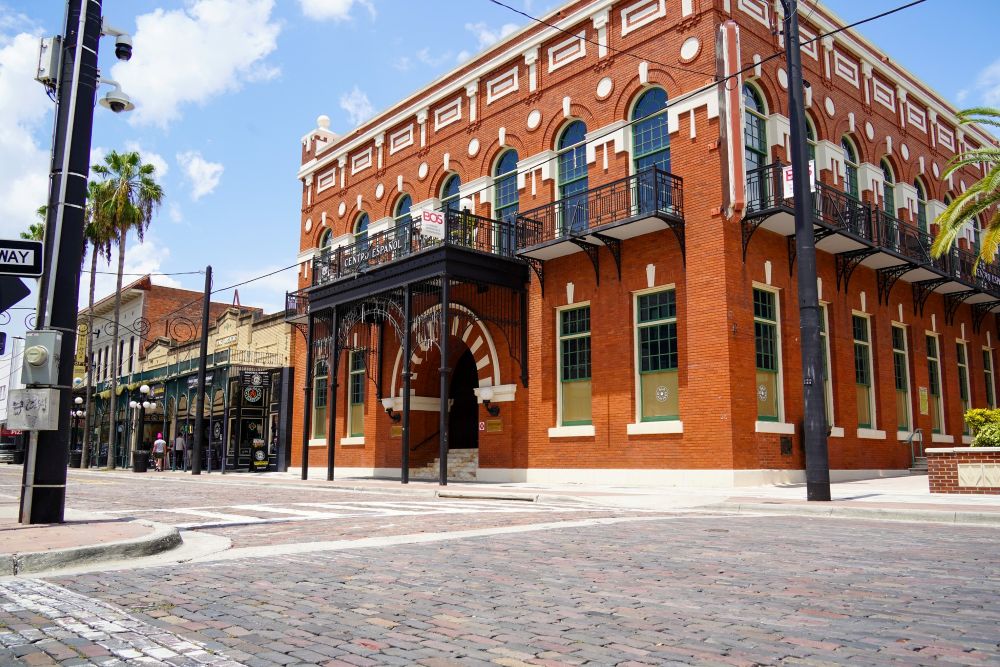
The buildings of Ybor City and West Tampa also preserve their history. The grand clubhouses that the Italians, Spanish, and Cubans built were places where members could get a haircut, visit the doctor, play dominoes, go to dances in the ballroom, and see a show in the auditorium.
Maria Leto Pasetti, who died in 2019, told Mormino about a tea dance held at El Centro Espanol on Sunday afternoon, Dec. 7, 1941.
“Her aunt would come along as the chaperone to make sure she wasn’t flirting too much,’’ Mormino says.
At 1:30 in the afternoon, the orchestra leader, Don Francisco, interrupted everyone and told them that the Japanese had attacked Pearl Harbor, which brought the United States into World War II.
“She said half the group were young men already in uniform,” Mormino says. “And they were told to wait outside, the bus from the airfield will pick you up. And all the young girls went out on the balcony that’s still there and just cried and cried as the bus took away their boyfriends.’’
Mormino, recipient of the Florida Humanities Lifetime Achievement Award for Writing, is the Frank E. Duckwall Professor of History Emeritus at USF. Duckwall was a physicist, Tampa businessman, and philanthropist who died in 1993.
For more information and tickets, go to Duckwall Lecture
Author

Related Articles
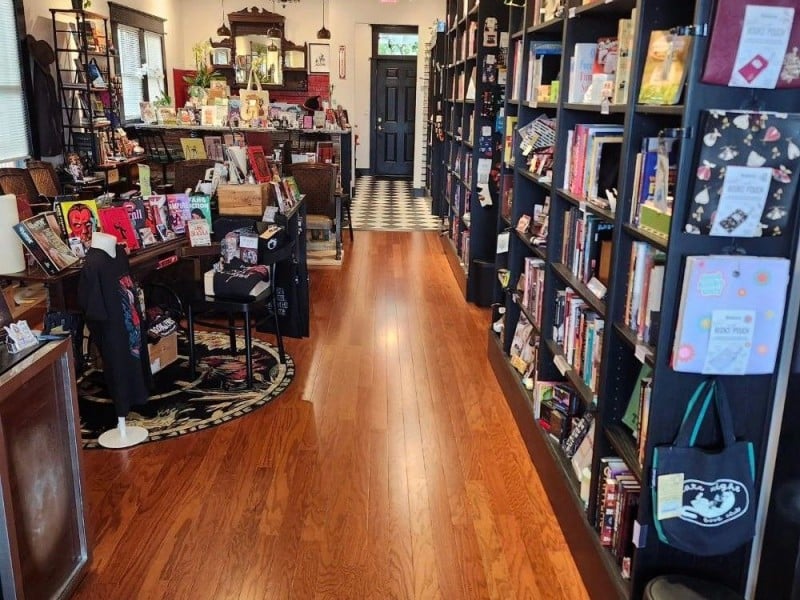
A new chapter for Tampa Bay’s independent bookstores
Across Tampa Bay, independent bookstores are making a comeback by offering a sense of place, distinct personality, and human connection that online retailers can’t match.
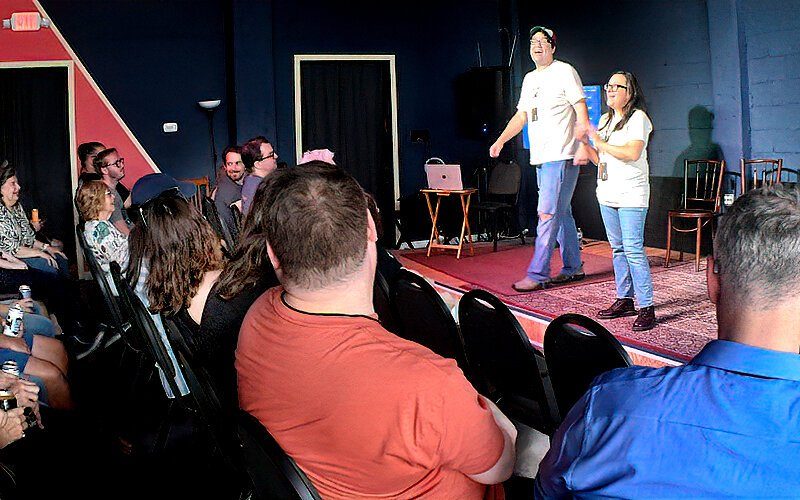
Improv community rallies around Ybor City’s Countdown festival
After Countdown Improv Festival co-founder Justin Peters was diagnosed with brain cancer, the improv community stepped up to make sure the show goes on.

Tampa Bay back-to-school supply drives, giveaways
Back-to-school supply drives and giveaways provide crucial resources to the Tampa Bay region’s economically disadvantaged students and families.