Tampa Heights: From ‘Highlands’ to The Heights
What's happening now in The Heights is transformative for the city of Tampa. It also is a change catalyst for Tampa Heights where community activists strove for years to revitalize a neighborhood worn down by urban decay, drugs, and crime.
Pioneer families sought out the “high lands” north of downtown Tampa to build stately homes and grand churches, and to enjoy sweeping views of the Hillsborough River.
Those 19th-century founders of Tampa Heights — the city’s first suburb — wanted a home life away from the urban rush of business and commerce.
Those movers and shakers of the past built a neighborhood of street grids, tree canopies, sidewalks, and front porches. But, in Tampa Heights, neighbors kept their growing city within a short stroll and later a trolley ride away.
The makers and creatives of the 21st century are re-imagining those lines of separation and embracing the urban lifestyle where people live, work, and play in the same community.
For Tampa Heights, that 24/7 urban thrum is revving up at Armature Works, the anchor for the master-planned development known as The Heights. It’s earning a reputation as the smartest, trendiest gathering place in town.
The Heights is transformative for the city of Tampa. It also is a change catalyst for Tampa Heights where community activists strove for years to revitalize a neighborhood worn down by urban decay, drugs, and crime.
“It’s (The Heights) a kind of a visionary thing,” says Jason Ricke, president of the Tampa Heights Civic Association. “If you look at other areas where there is such economic development, such as Denver and Portland, you’ve seen that those areas are having phenomenal growth and economic success.”
Over the next eight to 10 years, The Heights will grow into an urban village spreading over nearly 50 vacant riverfront acres. At build-out, there will be about 4.5 million square feet of industrial uses, 1.5 million square feet of offices, more than 500,000 square feet of retail and more than 5,000 residential units.
Open, dusty lots now fronting the river and temporarily functioning as overflow parking for Armature Works will give way to upscale apartments, trendy boutiques, offices, a hotel, and a grocery store.
The Heights is among many developments shape-shifting Tampa’s landscape and skyline, but it is uniquely bridging the gap between downtown and surrounding neighborhoods north of the city. Tampa Heights’ shares borders with Ybor City, Ridgewood Park, Riverside Heights, V.M. Ybor, Ybor Heights, Ybor City, and Seminole Heights.
The city of Tampa’s explosion of growth encircles the Channel District, Water Street Tampa, new residential towers lining Franklin and Tampa streets and Florida Avenue, and the University of South Florida’s expanding downtown footprint.
These are developments long predicted and sought for decades.
Turning nothing into something
Developers came tantalizing close to fruition with another proposed master-planned community in the early 2000s only to see it fall apart amid the 2008 recession.
SoHo Capital Developers Adam Harden and Chas Bruck saw an opportunity to revive those efforts when the economy turned. They are the creatives behind The Heights, which broke ground on Armature Works in 2013. The duo repurposed an existing historical structure, the city’s former maintenance shop for trolley cars.
SoHo created a free-flowing indoor space with about 73,000 square feet filled with eateries, bars, event spaces, and an upstairs co-working loft.
Outside is shared space for relaxing on a wide lawn, playing games or eating take-out. A rooftop bar at Armature Works, M. Bird, and an outdoor seafood restaurant on the river, Stones Throw, are the newest tenants.
The Pearl is a 314-unit upscale apartment community rising to seven stories on the front side facing the Hillsborough River on Ola Avenue. The building tapers down to four stories to the rear, along Ross Avenue.
A row of 1920s bungalows, clipped lawns, and shade trees lines Ross. It’s where the new urban greets Tampa Heights’ older street grids encompassed within designated local and national historic districts.
And, it’s an example of how The Heights fits within the weave of the neighborhood’s historic fabric.
“We didn’t want to have a big 7-story building looming over residential,” says Bowen Arnold, principal of DDA Development which built The Pearl.
Back on the urban side of The Pearl, new businesses are opening at ground level, including a nail care salon, barber/hair salon, Irish pub, and an urgent care center. A second phase of The Pearl will be built on vacant land abutting the current complex.
The Heights’ mix of residential, retail, and office is having an impact.
“We think it’s been a significant benefit,” Arnold says. “The fact we did something over here — it encourages a flourishing of apartments and retail markets. You’re starting to see it branch out.”
He noted commercial properties on Columbus Avenue are being marketed for their closeness to Armature Works.
“The tentacles of this are significant,” Arnold says.
A few months ago, former Tampa Mayor Bob Buckhorn celebrated the groundbreaking of The Heights Union Creative Office Center, Tampa’s first new office space in 25 years.
Its initial tenants, AxoGen and WeWorks, will bring cutting edge medical technology and innovative co-workspace to The Heights.
“I think about the beginning of this journey when there were all these fallow lands and abandoned buildings,” says Buckhorn. “(Harden and Bruck) believed in not what ya’ll saw, but in what could be. The talent pipeline is full. The kids we lost to other cities are coming back.”
Creating ties that bind
Harden and Bruck are Tampa natives who, like Buckhorn, want to see local talent thrive.
Harden describes The Heights as a “new transit-oriented place, a community center for surrounding neighborhoods.”
Public transit is an essential part of building walkable neighborhoods within Tampa, says Harden. Plans to extend the TECO Line Streetcar System include a stop at The Heights, he adds.

But other options, including Bus Rapid Transit, are needed to unify downtown with outlying neighborhoods and with the University of South Florida.
The intent for The Heights is to build a walkable but urbanized neighborhood that blends with Tampa Heights and its neighbors northward. Currently, The Heights flows into downtown with the Riverwalk Extension as the connective tissue.
Newer business investments in Tampa Heights include Ulele, a unique local food concept restaurant created by Tampa native Richard Gonzmart of Columbia Restaurants; The Hall on Franklin, an innovative food court; Foundation Coffee Co., featuring gluten-free snacks and indoor-outdoor meetup space; The Shuffle, an indoor shuffleboard bar on Tampa Street; and King State Coffee, a coffee roaster and beer brewery on Floribraska Avenue.
Ricke believes King State Coffee could be a neighborhood anchor in the same way Independent bar (on Florida Avenue) is in Seminole Heights.
“Before the Armature, or five years before that may not have been possible,” he says. “People would have seen too high a risk there.”

The Tampa Heights’ residential real estate market is improving as well.
“From a property perspective we’re definitely seeing good growth,” Ricke says. “Where our homes were once in poor shape or distressed, especially after the last housing bubble, they are being purchased, and purchased by young people or older people who once lived in Lutz.”
Community activists know how long this journey has taken.
Thomas Puch Kennedy is given credit as Tampa Height’s earliest resident as city dwellers migrated to the suburbs. They included judges, doctors, civic leaders, and cigar manufacturers. Different areas of Tampa Heights were settled by whites, blacks, and Latinos.
Some of its wealthier residents later moved to Davis Islands and Bayshore Boulevard.
Over the years, Tampa’s inner-ring suburbs shifted through the rhythms of growth and stability until the 1960s and ’70s when urban renewal and federal highways split apart communities including Tampa Heights and Seminole Heights.
Crime and drugs took their toll. Homeownership declined.
The 1980s brought signs of a turn-around as new residents took a risk, buying and rehabilitating bungalows and starting new businesses.
Over the next 15 or so years, change in Tampa Heights happened slowly but noticeably.
Orchestrating a revival
The Tampa Heights Civic Association, the Tampa Heights Junior Civic Association, Tampa Heights Citizens Advisory Committee, and business partnerships championed a revival.
In 2003, Tampa Heights’ residents were the first to develop a community plan, with city approval. The plan set priorities for commercial revitalization that included a town center but also put priorities on economic opportunities, homeownership, preserving housing stock, building a greenway system, and re-starting a trolley system.
Porch parties and annual home tours helped build relationships and lifted the image of Tampa Heights.
Stetson University College of Law built its campus on Tampa Street, replacing the former Tampa Police Department’s headquarters.
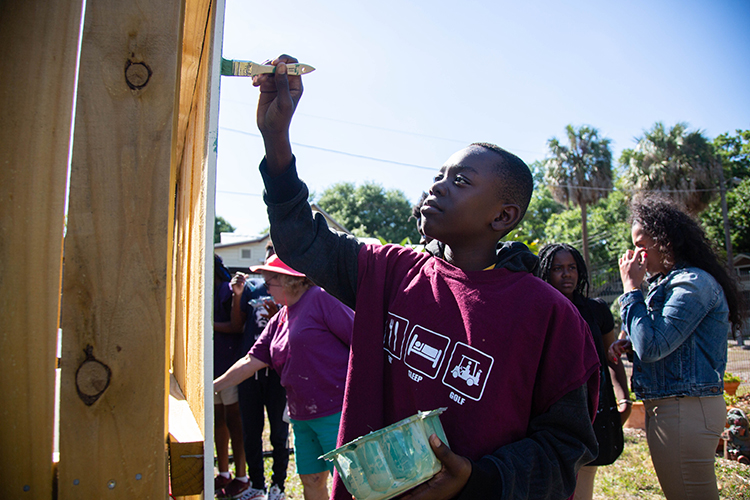
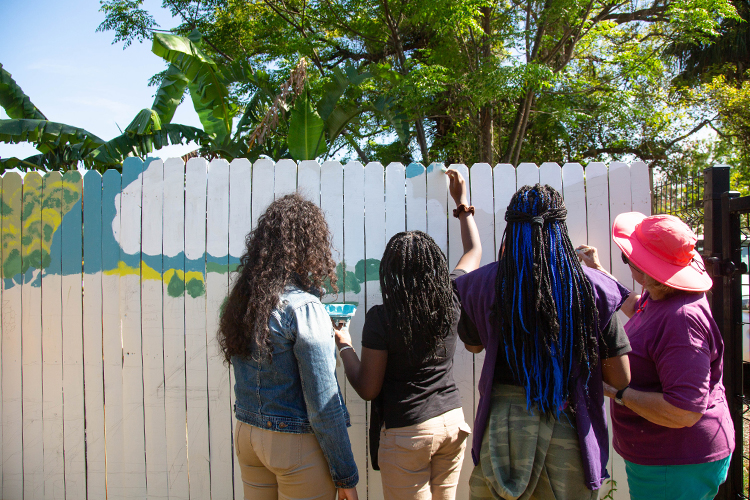
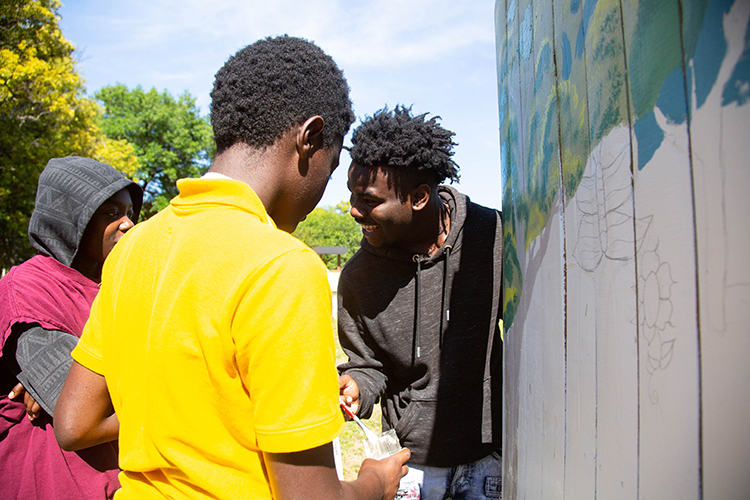
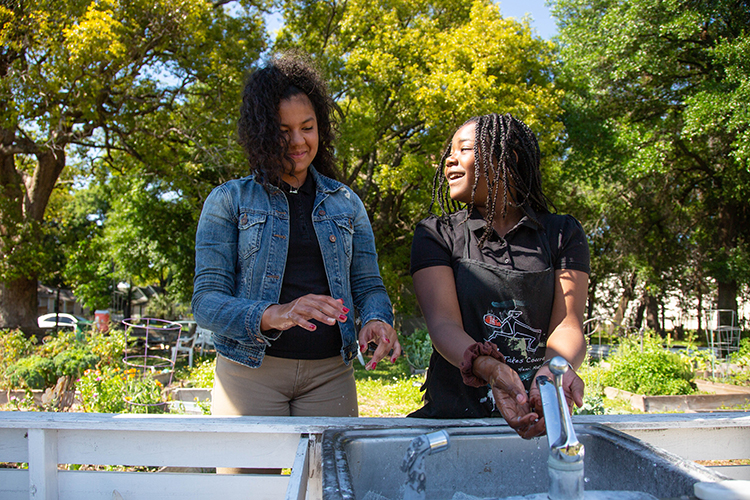
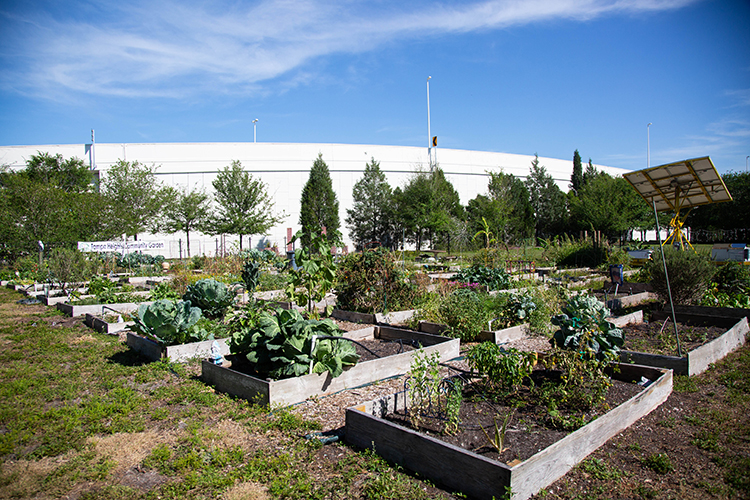
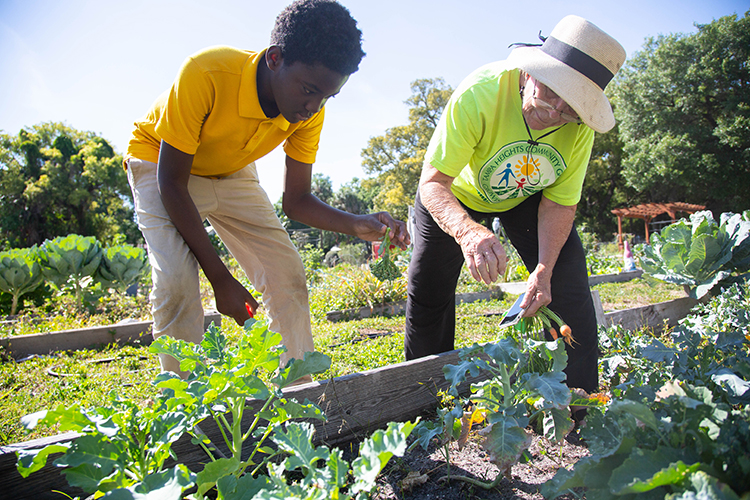
The Tampa Heights Community Garden on Francis Avenue took root on vacant land owned by the Florida Department of Transportation and leased by the city to the Tampa Heights Junior Civic Association.
From a dozen or more garden beds sprouting vegetables and flowers, the community garden is flourishing 10 years later. Today a hydroponic greenhouse harvests tilapia and runs on solar energy.
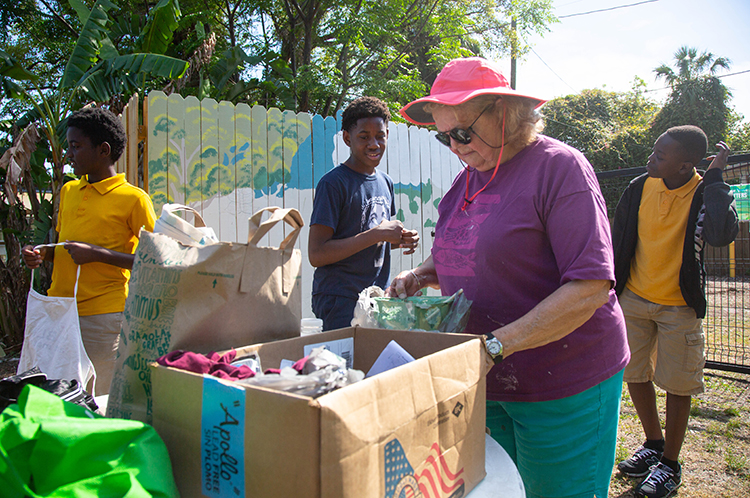
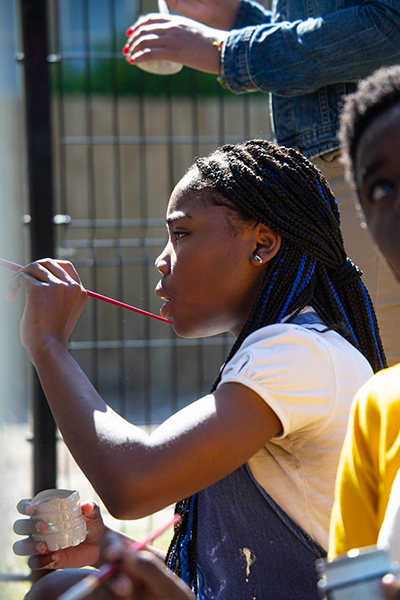
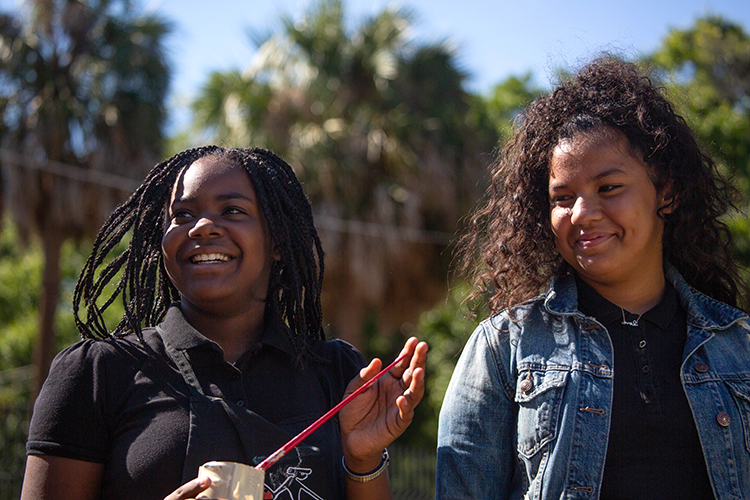
The garden is a shared occupation with residents and children enrolled in programs at the nearby Tampa Heights Junior Civic Association Youth Development and Community Center.
The Lofts, a rehabilitated historical church on Ross Avenue, houses lofts, offices, and the headquarters for Atelier Architecture.
Lee’s Grocery, on Central Avenue, is a gathering place for community meetings, wood-fired pizzas, and craft beers.
It’s an early example of successful redevelopment, says Ricke. What once was a street corner known for drug deals is now a family-friendly gathering place. “It really transformed that corner,” he says.
On Palm Avenue, construction is nearing completion on a Hindu temple.
Along Franklin Street, local business owners are populating
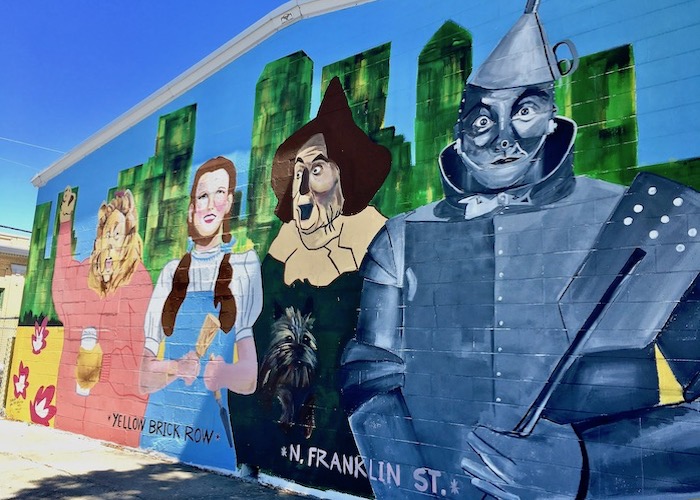
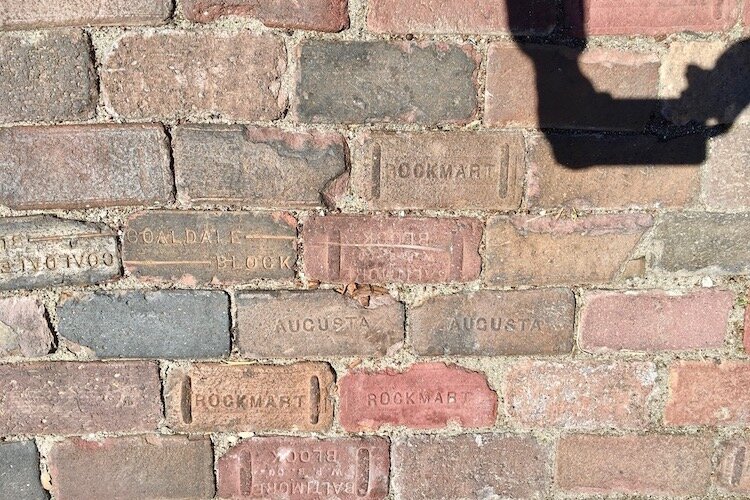
the Yellow Brick Row, a new business district with a bohemian, arts-inspired vibe. Owners and residents recently launched the Yellow Brick Row Business Association to support growth and tackle challenges for the future. (Read about that effort here.)
Among those challenges are a lack of public transit, affordable housing, protection for small local businesses, and gentrification.
“Our historical guidelines and the character of our neighborhood is really very important,” says Lena Young Green, founder of the Tampa Heights Junior Civic Association. She has been a long-time advocate for revitalizing Tampa Heights. But, she says, “We recognized the impact of development would be gentrification.”
Robles Park Village, a longtime public housing project, is slated to be torn down and replaced with a mixed-use housing project like ENCORE! Tampa, the development that replaced Central Park Village public housing.
“We’ve had a displacement of families we have served,” says Young Green. “They can’t afford to live in the city anymore.”
Ricke also shares those concerns.
“We definitely need more affordable housing options, not just in Tampa Heights but in Tampa in general,” he says. “We don’t want to be monolithic. We want to be a cultural and diverse neighborhood.”
But Ricke and Young Green say Tampa Heights’ residents have the means to make the neighborhood what they want it to be.
The Tampa Heights Riverfront Community Redevelopment Area dates to the 1990s. It provides targeted tax dollars to support community projects within the CRA and gives residents a voice.
“That was a really vital piece of community planning,” Young Green says. “We’ve always been involved in designing and changing the neighborhood.”
Ricke would like residents to re-visit the 2003 community plan.
“Some elements (of the plan) are occurring but some also need to be updated,” he says.
Still, Tampa Heights finally is back to its roots as a destination.
“In my opinion, Tampa Heights is one of the best neighborhoods you can live in in the city of Tampa,” Ricke says.
Here are links to more information about some of the organizations mentioned in this 83 Degrees story:
- The Heights
- The Pearl
- Soho Capital
- Stetson
- M. Bird
- DDA Development
- AxoGen Inc.
- WeWork
- Shuffle Tampa
- King-State
- Lee’s Grocery
- Yellow Brick Row Tampa
- Tampa Heights
- Tampa Heights Community Garden
- Tampa Heights Junior Civic Association
- Armature Works
- Ulele
- The Hall on Franklin
- Foundation Coffee
Author

Related Articles
St Pete Innovation District celebrates 10 years, looks to future
The St. Pete Innovation District is a hub of research, entrepreneurship, education, and collaboration.
Rock on! History Center extends popular guitar exhibit
“America at the Crossroads: The GUITAR and a Changing Nation” is at the Tampa Bay History Center through August 23.
Tampa Theatre’s “Second Century” transformation
Historic renovation and modern upgrades are getting the Tampa Theatre ready for its 100th birthday.