Tampa’s West Riverwalk expansion rolling along
Part transportation project, part economic development catalyst, Tampa’s West Riverwalk expansion is taking shape.
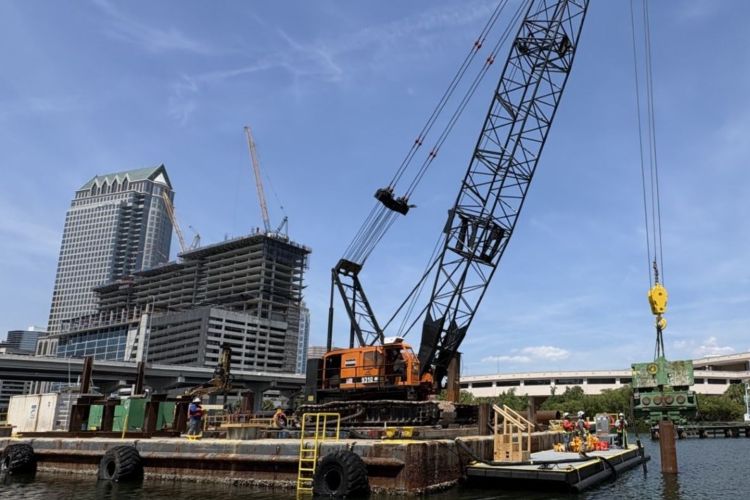
On a humid July morning, Tampa’s waterfront offered an odd juxtaposition: rowers cutting silently across the Hillsborough River, construction cranes rising over downtown, and the industrial choreography of barges, drills, and crews working just beyond the seawall.
A changing skyline draws the eye. New façades are taking shape at the Pendry Tampa hotel and condo tower, the One Tampa residential tower along Ashley Drive, and at the new Tampa General Hospital patient tower at the tip of Davis Islands. But some of the most consequential construction underway downtown is less visible.
As part of the West Riverwalk BUILD project, crews are installing nearly 70 drilled shafts and piles to support three new overwater structures: the Platt Street Pedestrian Bridge, the Brorein Street Pedestrian Bridge, and the Tony Jannus Park Observation Overlook. The work requires drilling each support roughly 40 feet into the riverbed, with some shafts reaching nearly 50 feet deep. Each structure will be built to support more than 130 tons.
The result will be a safer, longer continuous path that extends Tampa’s Riverwalk to the west side of the Hillsborough River and includes an overwater path beneath the Platt Street Bridge and new waterfront connections designed to further establish the riverfront as a connector, not a boundary.
The West Riverwalk is part transportation project, part economic development strategy, and part long-term reimagining of Tampa’s relationship to its waterfront. In addition to the overwater bridge structures, the project includes roadway and sidewalk improvements along Platt Street, Rome Avenue and, soon, Columbus Drive. There will be new sidewalks, additional Riverwalk segments, and construction of a living shoreline along the Hillsborough River. Altogether, the project includes roughly three miles of roadway improvements and two miles of new Riverwalk.
The living shoreline is an important part of the project’s aim. By reintroducing natural waterfront landscapes and habitat features such as mangroves, the project softens parts of an urban riverfront long defined by seawalls, roads, and hard infrastructure.
Once complete, the West Riverwalk is expected to better connect downtown Tampa with surrounding neighborhoods, including Hyde Park, North Hyde Park, West Tampa, Riverside Heights, Bowman Heights, Ridgewood Park, and the north end of Franklin Street. The city says the project will create a safer, car-free way for residents and visitors to move through the urban core and connect with the river.
The nearly $60 million project is supported by a $24 million federal Better Utilizing Investments to Leverage Development (BUILD) grant, $10 million from the West Tampa Community Redevelopment Agency, $7.5 million from the Community Investment Tax, and approximately $16.8 million in future non-ad valorem bonds. Congresswoman Kathy Castor announced an additional $250,000 in federal funding for the project earlier this year. Construction is about 20 percent complete and is expected to wrap up in spring 2027.
For Troy Manthey, President and CEO of Manthey Hospitality, the Riverwalk’s growth is not an abstract civic achievement. It’s the foundation for a local hospitality business that began with the Yacht StarShip dining cruises, expanded with Pirate Water Taxi, and has grown into the largest passenger water operator in the state, with approximately 250 employees.
“Our company and its 14 vessels wouldn’t be here today if it weren’t for the Riverwalk,” Manthey remarked during a July 7 press event.
Manthey’s story reflects the broader economic development argument behind the Riverwalk: public investment in walkable, connected waterfront infrastructure creates the conditions for private businesses, tourism operators, and hospitality ventures to grow around it. Hotels, bars, and businesses renting kayaks and paddleboards follow the investment. The existing Riverwalk on the east side of the Hillsborough has helped prove that over the last 15 to 20 years. The West Riverwalk aims to extend that momentum across the river.
On this Tuesday morning, joggers and rollerbladers breezed past pilings, barges, and drilling equipment. Beneath the construction, Tampa is laying the foundation for a waterfront that links neighborhoods, creates new public spaces, restores pieces of the river’s natural edge, and gives residents more ways to move through the city without getting in a car.
As Friends of the Riverwalk Board Chair Keith Greminger often puts it, the project is moving Tampa closer to a 20-minute walkable core.
For more information, go to the West River BUILD Project.
Author

Related Articles
Partner Partner Content Preparing Tampa Bay for the next generation of growth
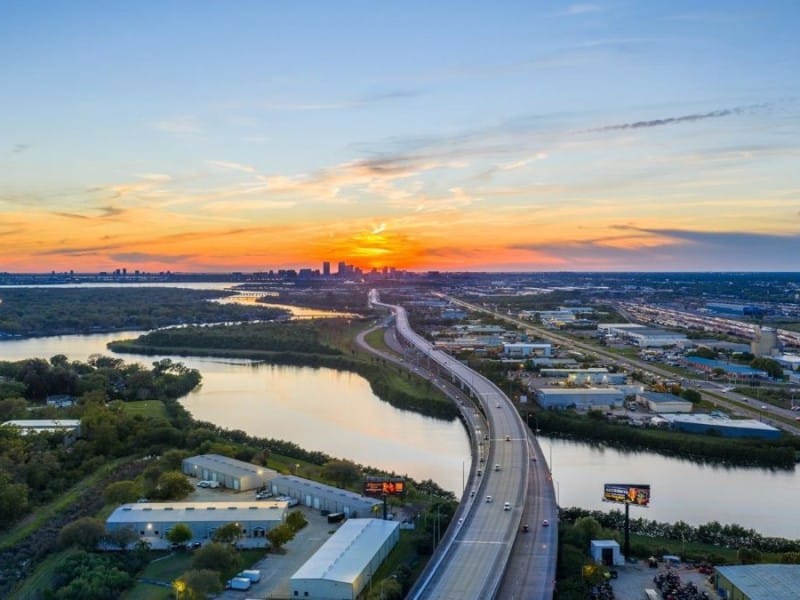
THEA commits $767.7 million to strengthen mobility, modernize operations, and prepare Tampa Bay for future growth.
Transportation projects will help shape Westshore’s future
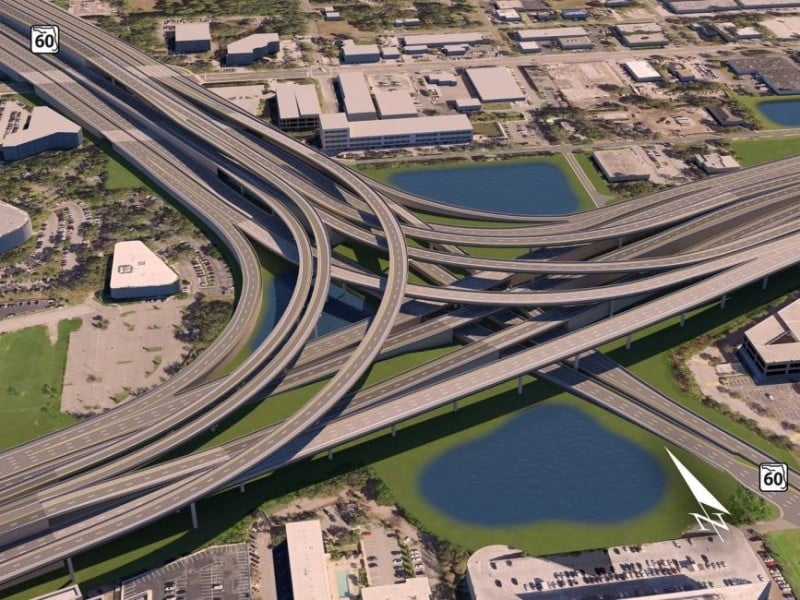
Massive regional transportation projects and local infrastructure improvements will impact Westshore’s evolution into mixed-use district
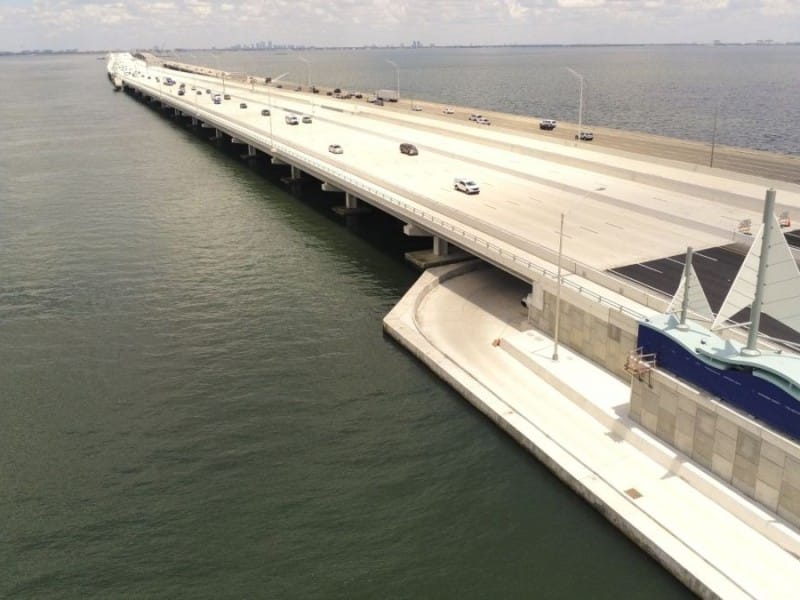
Howard Frankland shared-use path, express toll lanes open
Howard Frankland Bridge project is all but finished with express toll lanes, shared-use path now open.