Transportation projects will help shape Westshore’s future
Massive regional transportation projects and local infrastructure improvements will impact Westshore’s evolution into mixed-use district
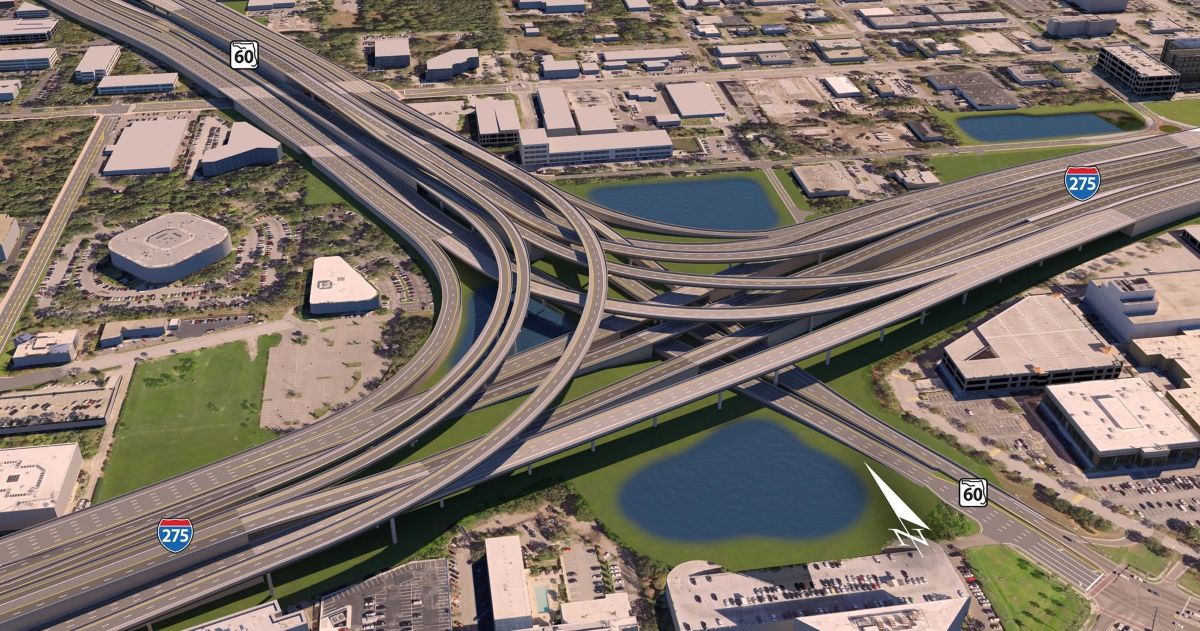
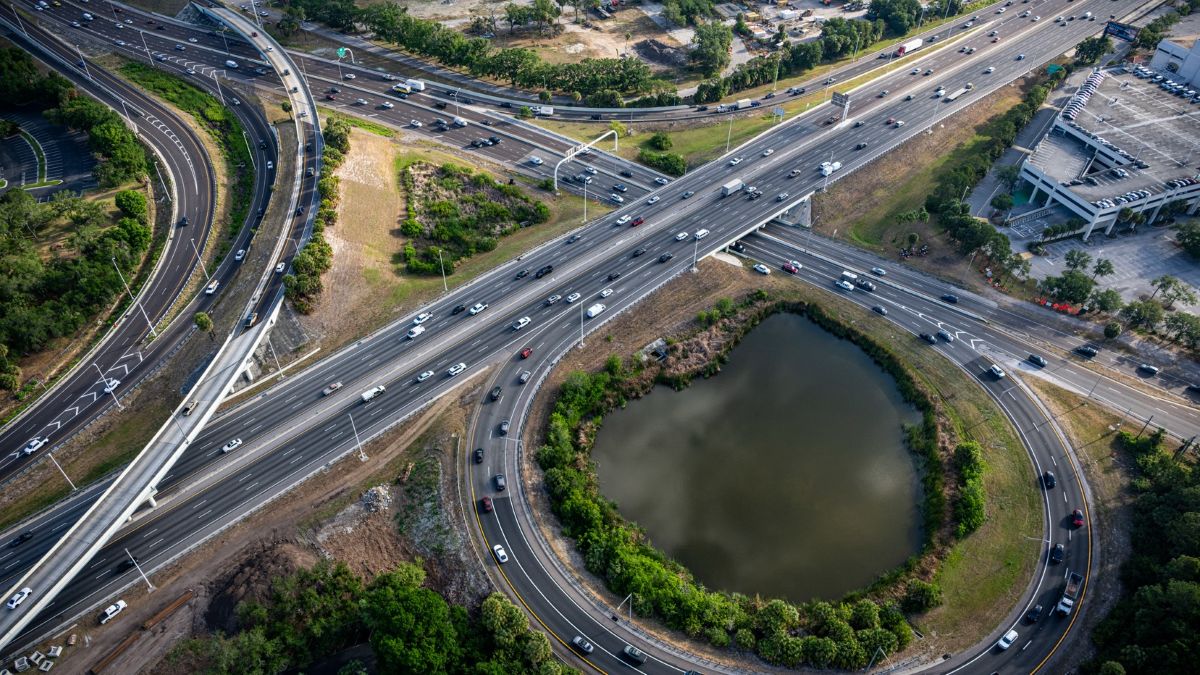
From the massive reconstruction of the Interstate 275/State Road 60 interchange to a long-discussed future regional transit hub, the Westshore District is at the center of the Tampa Bay area’s transportation network and some major projects. Likewise, providing viable transportation choices for the people who live and work in Westshore will play a central role in shaping its future as a bustling mixed-use district.
Right now in the Westshore area, one massive Interstate-275 construction project is finishing up as another gets underway. Now that the Howard Frankland Bridge’s express toll lanes and separated shared-use path are open, contractors Archer Western and Traylor Bros. have finished all significant work on the Florida Department of Transportation’s $974 million, nearly six-year project to build a new bridge span across Tampa Bay. Just north of the Howard Frankland, contractors Superior Construction and Lane Construction are in the early stages of work on the $653.3 million reconfiguration and reconstruction of the crash- and gridlock-prone Westshore interchange at I-275 and State Road 60. That project is expected to finish in 2030.
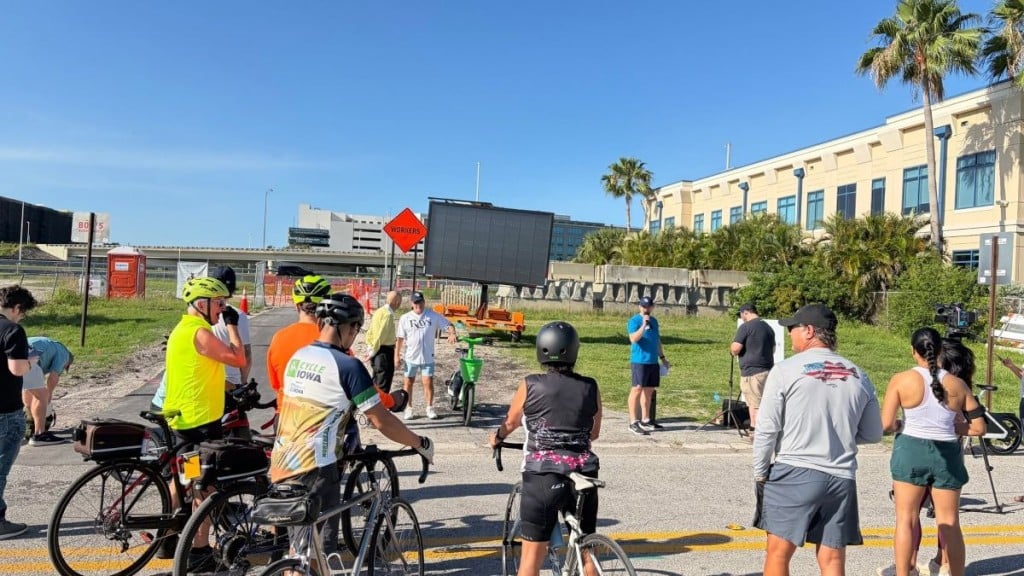
They are regional projects that also advance the Westshore Alliance’s transportation priorities by improving local traffic circulation and road connections, accommodating multiple modes of transportation, and better connecting Westshore with the region. The 12-foot-wide, nearly seven-mile shared-use path across the Howard Frankland is a big step toward assembling a regional bike trail network that links Hillsborough and Pinellas counties and runs through Westshore. The tolled express lanes across the new span are intended to reduce congestion and travel time for commuters and transit vehicles. The new span is also designed to support the weight of a potential future light rail system.
The Westshore interchange project will add trail connections and shared-use paths, including a direct link between the new Howard Frankland trail and the trail across the Courtney Campbell Causeway to Pinellas County, where FDOT contractors are currently building a pedestrian overpass over SR 60 to link to Pinellas’ trail system.
The interchange reconstruction will improve safety and offer a route out of congestion with new flyover ramps connecting SR 60 to I-275 northbound and the Howard Frankland to SR 60 and Tampa International Airport. New northbound express lanes will run from the Howard Frankland to the future Reo Street bridge. The interchange project will improve traffic circulation on local roads by reconnecting sections of the street grid. A new Reo Street bridge will carry traffic over I-275 directly to Kennedy Boulevard. Occident Street and Trask Street will extend under I-275 to connect to local roads.
Shifting focus
After the Westshore interchange reconstruction, the focus of regional transportation projects in the Westshore shifts to developing multimodal options. FDOT’s next major project in the Westshore area is the Westshore Intermodal Center, a long-discussed regional transit hub planned on the former site of the DoubleTree Hotel on Cypress Street.
“My family has been here since 1989, I feel like the interstate has always been under construction,” Westshore Alliance Executive Director Michael Maurino says. “The challenge is going to be maintaining traffic flow and business continuity while the interchange is being built. Then, after the interchange is built, we will need another type of transportation improvement, because we’re going to be tapped out for roadway space. You really can’t widen West Shore Boulevard. You can’t widen Kennedy. You can’t widen Cypress ot Lois. All these roads are as big as they can get. So in the face of growth, you have to provide some alternatives. That’s where transit and pedestrian access come in. I-275 will have a transit corridor, and the old DoubleTree site will be a transit hub. That’s the next phase. Once this interstate construction is done, we’ll move on to Westshore being this regional transit hub and using that preserved right-of-way to provide transit, not just to downtown from Westshore, but across the (Howard Frankland) bridge and to points north.”
Tampa International Airport (TPA) officials have discussed extending the airport’s automated people-mover tram system to the future intermodal hub. FDOT District 7 Secretary Justin Hall highlighted the intermodal center’s potential during the Westshore Alliance’s annual Westshore Development Forum in early May.
“What we’re going to do there is something transformational,” Hall said. “It’s not just multimodal; it’s not going to be just a bus station. There’s going to be more there than that. When we look at that site and what you can do, it really is an opportunity that does not happen very often in a metro area.”
Three Westshore area projects, the intermodal center, a planned premium transit system between TPA and downtown Tampa, and I-275 express lanes from Ashley Drive to Lois Avenue, made the short list of projects for the Tampa Bay Regional Infrastructure Accelerator. That grant-funded U.S. Department of Transportation initiative identifies projects that would benefit most from innovative financing tools that speed up the timeline for their development.
Meeting mixed-use development mobility needs
Within the Westshore District, meeting the mobility needs of mixed-use development remains a challenge and a priority. Currently, the Westshore Alliance and engineering and consulting firm EXP US Services are working on an update to the district transportation action plan mapping out mobility projects and priorities that will help Westshore thrive as a mixed-use district.
“While the Alliance aims to develop Westshore into a premier mixed-use district, the reality is the transportation infrastructure has not caught up with that vision,” Ivan Jimenez, EXP US Services’ project manager for the transportation plan, says during the annual Westshore development forum.
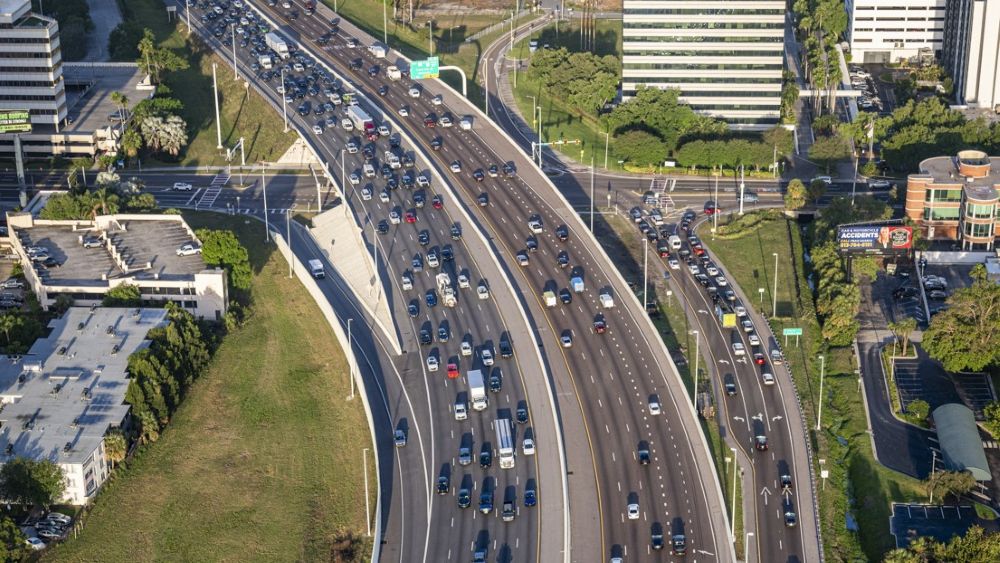
His presentation at the forum highlights a priority challenge. Of the more than 117,000 inbound commuter trips to Westshore each day, 60 percent drive alone, and 23 percent carpool on the roads that need to be updated to accommodate the district’s changing land-use patterns and growing residential population.
“One challenge with Westshore is we do not have the natural pedestrian grid that you would otherwise see in a large multi-use district, so getting those projects done is more of a priority,” Maurino says. “The good thing is that a lot of the Florida Department of Transportation’s projects have included bike paths, bike lanes, sidewalks, and pedestrian access. However, there are still a lot of gaps within the system.”
The transportation action plan will, among other things, identify projects to fill those gaps. Maurino says he expects the plan to be completed by the end of September. The Westshore Alliance will then present the document to the Tampa City Council, Hillsborough County Commission, and Hillsborough Transportation Planning Organization.
“It helps us make the case that the growth of Westshore, especially as a mixed-use district, requires new projects,” Maurino says. “It’s more than just an advocacy document; it’s also a planning and engineering document.”
Released in 2018, the previous action plan identified 105 projects, including 77 that were already part of an adopted local government or FDOT transportation project plan. Fifty-four percent of the projects in the report are completed, under construction, or funded. The traffic signal FDOT installed in March 2025 at Boy Scout Boulevard and Manhattan Avenue, previously the only entrance to International Plaza without a light, is one of them. The Westshore Alliance spent a year advocating and working with local and state officials to get that safety improvement green-lighted.
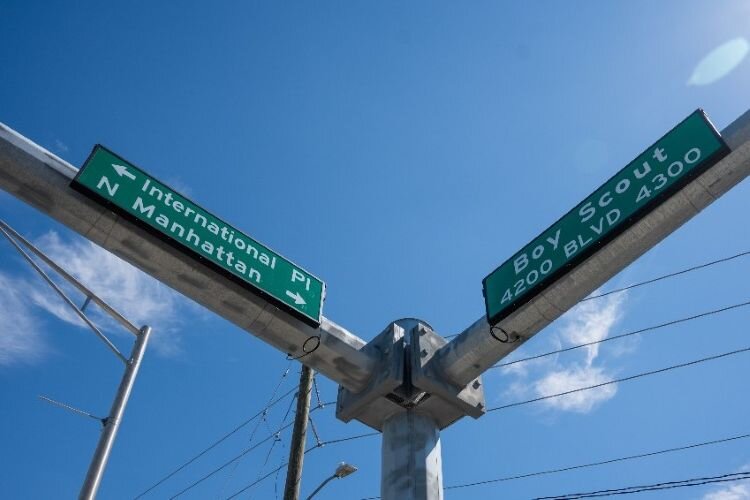
The resurfacing of North West Shore Boulevard from Kennedy Boulevard to Spruce Street also includes some elements of the “grand boulevard” design that the Westshore Alliance proposed. They include mid-block pedestrian crossings and landscaped medians. The Westshore Alliance is currently seeking bids from landscaping companies for the installation and maintenance of the median landscaping.
The Westshore Alliance also has an online survey to provide input for the transportation action plan. The 2025 Westshore District Resident & Worker Survey also sheds light on transportation preferences and practices.
The survey, conducted and compiled by Tampa firm HCP Associates, shows that 37 percent of residents and 45 percent of workers identify transportation/infrastructure as the most important area for improvement in the district. While the overwhelming majority of workers drive alone to their jobs in Westshore, 89 percent of residents and 82 percent of workers said they would use public transit on a dedicated corridor between Westshore and downtown. Eighty percent of residents and 76 percent of workers said they would use a trolley-style shuttle. Eighty-one percent of residents and 69 percent of workers would use an urban trail between Westshore and downtown Tampa.
For more information, go to Westshore Alliance
This story is made possible through an underwriting agreement between the Westshore Alliance and 83 Degrees
Author

Related Articles
Partner Partner Content Preparing Tampa Bay for the next generation of growth
THEA commits $767.7 million to strengthen mobility, modernize operations, and prepare Tampa Bay for future growth.
Tampa’s West Riverwalk expansion rolling along
Part transportation project, part economic development catalyst, Tampa’s West Riverwalk expansion is taking shape.
Howard Frankland shared-use path, express toll lanes open
Howard Frankland Bridge project is all but finished with express toll lanes, shared-use path now open.