Designing For Disaster: The AbleNook Story, Tampa
University of South Florida alumni and architect Sean Verdecia is almost done with his first masterpiece. After years of planning and prototypes, his "multiuse portable dwelling,'' AbleNook, is planned for mass production in 2013. The journey from idea to reality has transformed the project from a local university assignment to a highly anticipated, fully functioning living module in the global marketplace.
Sean Verdecia is no stranger to hard work. After a long day at Alfonso Architects, Verdecia, descends into the warehouse of Alfonso’s building, where he labors into the early hours of the next morning. Years of planning and building are almost complete. AbleNook, will be ready for mass production and distribution early next year.
The humble beginnings of the AbleNook idea sprung out of an assignment given to Verdecia, 34, while he was an undergrad at Hillsborough Community College. In response to Hurricane Katrina, a project was given to Verdecia’s class to create disaster relief housing that could be easily assembled and transported.
“I kept using that idea over and over again for other projects,” says Verdecia, “and I realized that, ‘Hey, this thing kinda has potential’.”
After transferring to the University of South Florida in Tampa for a masters degree in architecture, Verdecia grabbed a fellow classmate, Jason Ross, and continued to mold his soon-to-be AbleNook model.
Verdecia and Ross’s design continued to evolve and eventually found its way into USF’s Patents and Licensing Department. While other students were doubtful, Verdecia was confident that AbleNook would be a success.
AbleNook was granted the school’s blessing and Verdecia received the first patent to come from the USF School of Architecture.
“It’s become one of the university’s favorite projects,” says Verdecia.
After graduating and transitioning into a fulltime architect position at Alfonso Architects in Tampa, Verdecia made every effort to continue the AbleNook project. Even a few trips back to his alma mater were in order to use equipment for prototype construction.
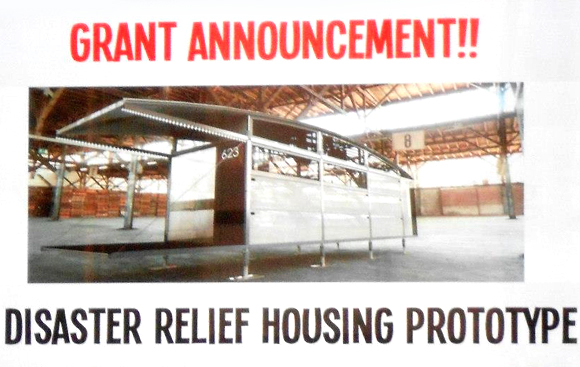
The AbleNook structure is based off a 1920’s bungalow: lots of natural light and a large porch to encourage a sense of community. AbleNooks are also completely customizable and require no tools. The modules can be assembled in about 4 hours with only a few people.
While AbleNooks may look minimalist, they are equipped with all of the necessities of modern living. LED lights illuminate the front porch once the structure is hooked up to a generator. The wall panels are identical and universal in any position. Electrical sockets and windows can be placed in their most functional locations. Customization and function are the AbleNook’s middle name.
“I want to put the best product on the market as possible,” says Verdecia. “Even though it looks great right now, it could be better.”
Awesome Tampa Bay Grant
Verdecia and his team continue to work on the prototype model. The rounded solar panel roof gives the AbleNook a feminine touch while robust legs and sharp, distinct edges make the structure heavy and masculine. The reception to this unisex, multifaceted structure has been overwhelmingly positive.
During its first reveal on Inhabitat, a weblog devoted to the future of design, AbleNook was welcomed with open arms. Verdecia received e-mails from interested buyers from all over the globe. While some were interested in the disaster relief aspect that AbleNook provided, others wanted the modules for more recreational purposes.
Camping, housing expansion, office space and small medical facilities are only a few of the ideas presented to Verdecia by enthusiastic future clients.
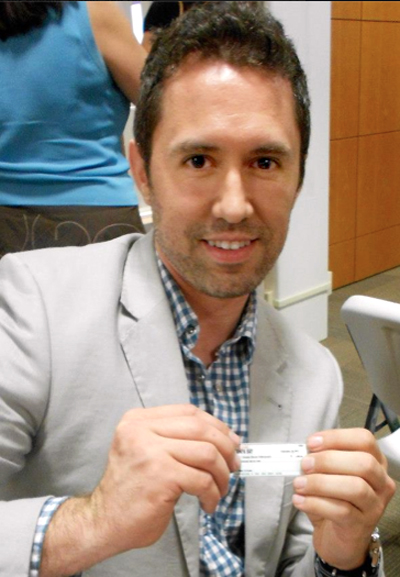
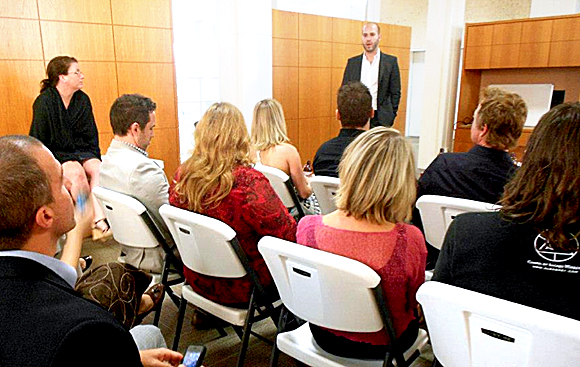
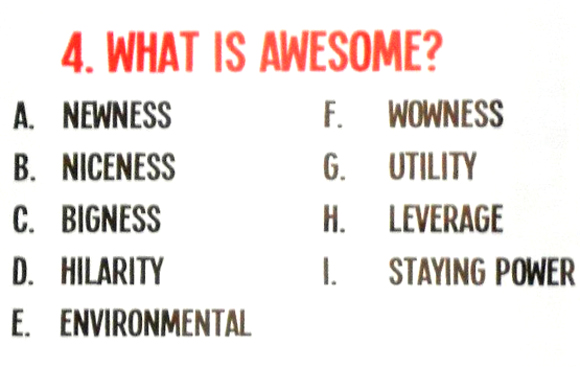
Local recognition for the AbleNook project was also given to Verdecia by the Awesome Tampa Bay grant organization. The micro-grant program acknowledges forward thinking projects in the Tampa Bay region. The AbleNook project was the fourth recipient of the $1,000 grant in September.
“It sounded like something achievable. Something that would help with issues we face locally,” says T. Hampton Dohrman, the “dean of awesomeness” at Awesome Tampa Bay. “Sean is going to take that $1,000 and make a huge impact with it.”
The culmination of years of research and development will produce fully functioning AbleNooks ready for eager buyers in early 2013.
Such a creative and innovative module design can only invoke anticipation for Verdecia’s next project inspiration. Until then, AbleNook will have future owners saying, “There’s no place like home.”
Christina Barron is studying journalism and mass communications at the University of South Florida St. Petersburg. Comments? Contact 83 Degrees.
Related Articles

Child Abuse Prevention Month spotlights year-round efforts to support parents, protect children
Bay Area hospital systems, community nonprofits have array of research-backed programs and resources to prevent child abuse.
83 Degrees announces changing of the guard
Andrea Daly succeeds Founder and longtime Publisher Diane Egner, who will stay involved with 83 Degrees.
ULI Tampa Bay Trends: Insider insights on state of real estate
ULI Tampa Bay Trends Conference is the place for up-to-date info on Bay Area’s real estate industry.