#83DegreesNYAS: Valuing Global Diversity In Tampa Bay
A lively community conversation about valuing global diversity successfully engages an audience eager to weigh in along with panelists on why diversity matters in Tampa Bay and how we can build stronger communities, better schools and a well-trained workforce together. Join the conversation on Twitter with #83degreesNYAS.
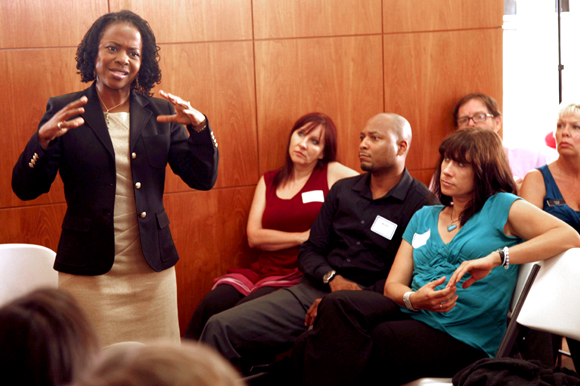
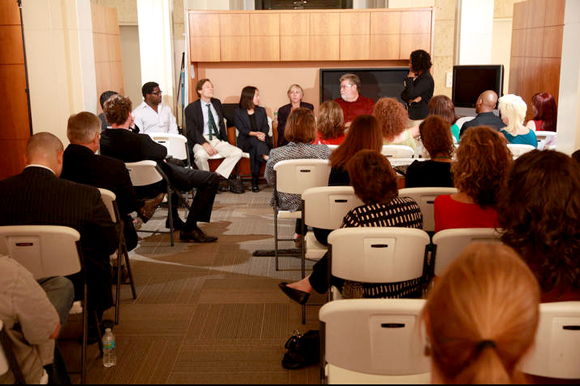
What comes to mind when you think of diversity? Is it culture? Ethnicity? Age? Education? Is Tampa Bay doing enough as a community to maximize the opportunities offered by diversity in all aspects of our lives and capitalize on the diverse skills of our citizens in the areas where they’re needed the most?
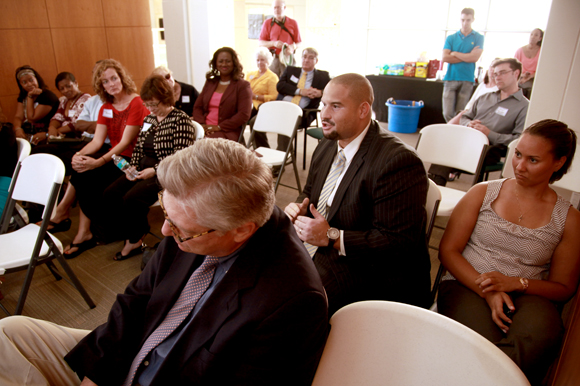
The discussion at 83 Degrees Media‘s sixth “Not Your Average Speakers” series event delved into those questions and more as business owners, artists, educators, students and retirees filled a room at the Florida Museum of Photographic Arts inside the Cube at Rivergate Plaza in downtown Tampa on Thursday, May 17.
“When you think about diversity, what is one word that comes to mind?” asks moderator LaFern Batie, international business strategist at The Batie Group in Tampa, in framing the discussion.
The responses? “Culture.” “Tension.” “Mixture.” “Variety.”
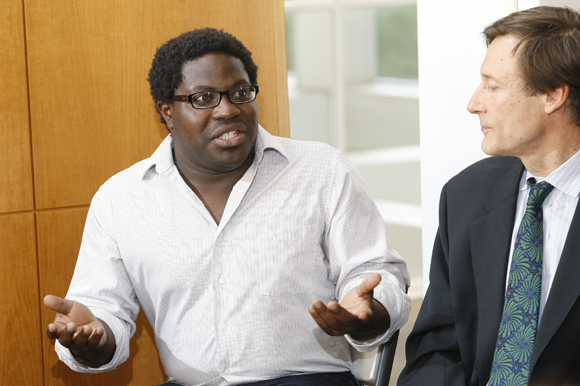
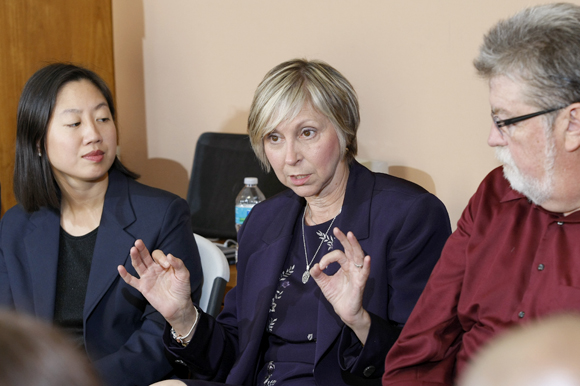
The panelists — five Tampa Bay area professionals representing different aspects of diversity in our community — enthusiastically dive right in, eager to help explain what defines us as individuals and as a community.
Perspective, perceptions, education and experience matter. It’s not simply about the color of your skin or ethnicity, panelists agree.
Defining Diversity — What Does It Mean To You?
Part of what makes Tampa Bay an exciting place to live is its diverse collection of industries, neighborhoods and citizens who’ve traveled from all over the globe to live in the Sunshine State. It’s this vibrant patchwork of people that makes our region so attractive to outsiders — and to insiders.
When Batie asks the panel to explain what attracted them to the Tampa Bay region, panelist Al Karnavicius, founder and president of St. Petersburg printing and marketing firm Bayprint, jokes that he was “forced” to move as a child to St. Pete from Chicago in 1958 when his family relocated for his dad’s job offer.
Back then, Tampa Bay’s attraction was simply its affordability and lack of snow. Today, the attractiveness is so much more. It’s mostly about the quality of life, Karnavicius says. Yes, salaries are lower here compared to in cities like Boston, Washington D.C. and Portland. However, Tampa and surrounding small cities are in a unique position in that the Bay area offers ample opportunities for just about everyone and faces the chance to re-build from the ground up after a few tough years of recession.
In that sense, Tampa bears some similarity to the Roman Ruins, suggests Jean-Charles Faust, president of the French American Business Council of West Florida.
“I like Tampa because a lot remains to be done,” he says. “The land is available, there’s room to expand and companies are choosing Tampa over Miami for a better quality of life.”
The opportunity to tap into that potential is the reason panelist Joel Fenelon established his business in Tampa.
Fenelon is a University of Tampa music performance graduate who launched Muzime, an online music marketplace and social networking site, out of Tampa Bay in February.
“If you can do something where it’s difficult, it makes success that much easier in other places,” he says.
Turning Challenges Into Opportunities
All agree that it’s no secret that Tampa faces challenges. Recent headlines regarding FCAT writing scores sparked a lively debate on the merits of standardized testing, the state of Florida’s education system and the future of our workforce.
Tampa-based attorney Grace Yang of GrayRobinson, a panelist with two children in first and third grade, says the recent decision by the State Board of Education to reduce the passing standards for FCAT writing scores benefits no one.
“We need good, smart, strong kids who can face a challenge and won’t get easily discouraged,” Yang says. “They need to know you have to work really hard to get where you want to be. We shouldn’t be lowering the bar.”
Working together as a region to nurture Tampa Bay’s future workforce should be a top priority for all of its citizens — not just parents and educators. Retirement could be a chance for professionals to give back to the younger generation, share their expertise and provide students with opportunities they might not be able to get in a classroom.
“We need to create a safe environment for one-on-one learning,” says panelist Elaine Terenzi, chief probation officer at the U.S. Probation Office in the Middle District of Florida.
By investing in children, we’re giving them more than an education — we’re giving them a reason to stay and become productive citizens in Tampa Bay.
“A well-educated society becomes a well-educated workforce,” Yang says. “You have to give them a hospitable environment so they’ll decide to start a business here instead of in city X, Y or Z.”
Help Us Stay And Contribute
Audience member Lyndi Jordon, a marine biology graduate who moved from Trinidad to Tampa to study at The University of Tampa, asks for the panel’s thoughts on international students who come to receive an education, fall in love with the city and want to stay in the country upon graduation.
What advice would you give to students who are eager to contribute to Tampa Bay’s diversity but who face a series of obstacles to stay?, she asks.
Don’t give up, the panelists agree.
“There are employers and companies who value a certain language skill, point of view, life experience that international students bring,” Yang says. “We need to encourage diversity in the Tampa Bay area so we have companies in different industries who can employ our local population.”
Afterward, audience member Maria Poulakis, a business development manager for Passport Health of Tampa, says she appreciates having an honest conversation on the issues impacting our region.
“It’s something we should probably revisit in the future,” she says. “Perhaps a milestone report a year from now.”
For public speaker and digital entrepreneur Maura Sweeney, the topic of diversity was a springboard for other complex issues, such as community values regarding the direction we want our education system to go.
“This community can decide what our values are,” she says. “When people know their values, they know what they’re rallying around.”
The next NYAS event will be about “Pondering P3s — Public-Private Partnerships” on Wednesday, June 20, from 5:30 to 7:30 pm at CAMLS in downtown Tampa. Speakers include Karen Holbrook of USF, Maggie Gunther Osborn of the Florida Philanthropic Network and Randy Simmons of RR Simmons Construction. RSVP by clicking here.
Matt Spencer, a University of South Florida grad, is a native Floridian who enjoys sharing his love for Patty Griffin, browsing produce stands, spending hours in record shops and gawking at the ice cream selection in grocery stores. Comments? Contact 83 Degrees.
Related Articles

Child Abuse Prevention Month spotlights year-round efforts to support parents, protect children
Bay Area hospital systems, community nonprofits have array of research-backed programs and resources to prevent child abuse.
83 Degrees announces changing of the guard
Andrea Daly succeeds Founder and longtime Publisher Diane Egner, who will stay involved with 83 Degrees.
ULI Tampa Bay Trends: Insider insights on state of real estate
ULI Tampa Bay Trends Conference is the place for up-to-date info on Bay Area’s real estate industry.