ULI Tampa Bay tackles real estate industry’s gender gap
ULI Tampa Bay’s Women’s Leadership Initiative works to increase the number and visibility of women leaders in the real estate industry.
At real estate and land-use industry events across Tampa Bay, Jessica Barnes had grown used to scanning the room and seeing a familiar uniform: blue blazers, mostly worn by men.
It wasn’t that women weren’t present. And it certainly wasn’t that women weren’t doing the work. They were managing projects, shaping brands, building relationships, navigating construction timelines, guiding leasing strategies, and helping major developments move from idea to reality.
They just weren’t always the ones on stage.
Barnes, senior vice president of client services at Bozzuto Property Management, had noticed the gap before. In larger markets like Washington, D.C., where she previously worked, women’s leadership in real estate and development felt more visible. But after moving to Tampa Bay and working on major projects, including Water Street Tampa, she found herself in rooms where the presence of women working behind the scenes was not always reflected in who was asked to speak publicly about development, land use, and the region’s future.
“Power of we”
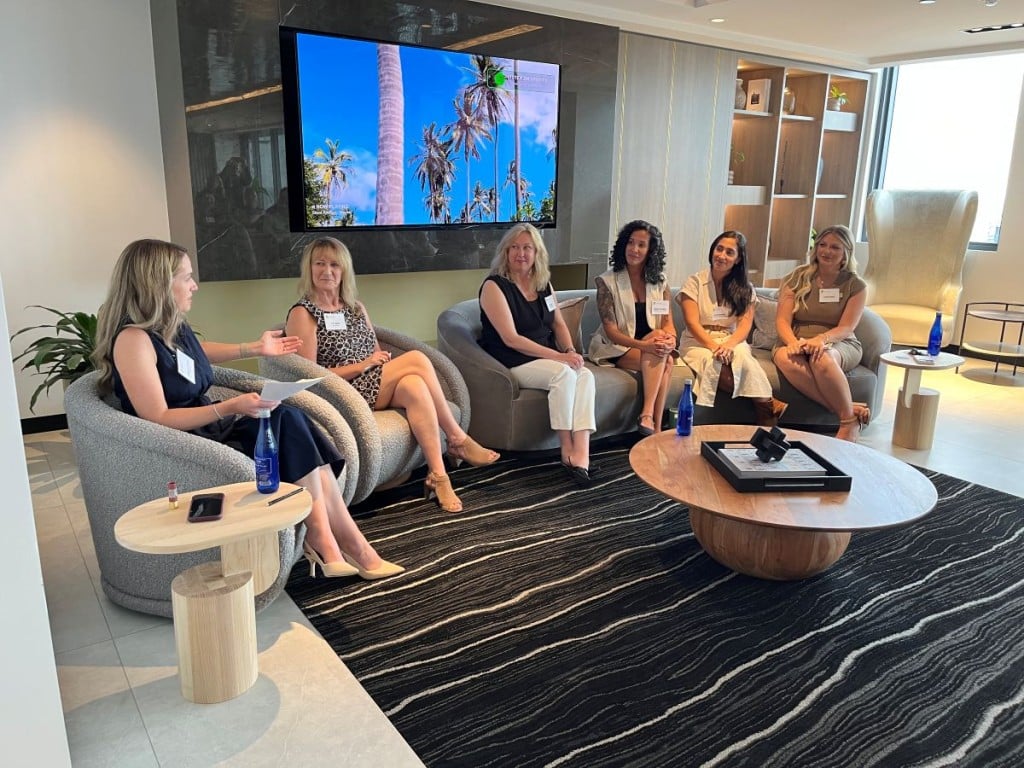
That observation helped spark a recent panel discussion hosted by Urban Land Institute (ULI) Tampa Bay’s Women’s Leadership Initiative (WLI). The program, “Women-Driven Projects,” spotlighted the women helping lead complex real estate projects shaping Tampa Bay’s rapidly changing built environment.
One project highlighted was VIV, a 15-story, 269-unit residential development in downtown St. Petersburg. Barnes says women were central to the project’s vision, execution, collaboration, leasing, construction, and development.
The project team included Maria Escalona of JE Dunn Construction; Ela Cole, Nicole Transleau, and Lori Wortz of Belpointe Asset Management; and Lyndi Sastre of Bozzuto. Together, Barnes says, their leadership style was highly collaborative, deeply engaged, and unusually aligned across multiple firms.
“The project team had no ego, no hierarchy of voices,” Barnes says.
She says the project’s success was rooted in a shared “power of we.” The project opened early, came in under budget, outperformed leasing expectations, and benefited from strong philosophical alignment among the companies involved. That kind of alignment, Barnes says, is rare.
“What if every project felt like this?” she recalls thinking.
For Barnes, the VIV project offered a clear example of what can happen when women are empowered in key leadership and decision-making roles and the team culture rewards listening, accountability, and shared problem-solving.
She says the event resonated because attendees could feel the shared respect among the panelists. There was no obvious hierarchy in the conversation. Each person had a voice. Throughout the project, challenges were treated as shared problems instead of someone else’s responsibility.
“When there was a problem, it was an ‘us’ problem,” Barnes says.
Breaking barriers
ULI Tampa Bay’s WLI is part of a global ULI network focused on promoting the advancement of women in real estate and development. Locally, the initiative works to increase the number of women in leadership positions, improve their visibility, get more women involved with ULI Tampa Bay, and support women as speakers, moderators, and panelists at industry events. Those goals are advanced through working events, tours, panels, leadership opportunities, and informal spaces where women can ask questions, build relationships, and develop a stronger understanding of how the many pieces of the industry fit together.
For Rachel Ebner, a business development leader at PCL Construction, that access has been one of WLI’s most valuable contributions.
Ebner got involved with ULI around 2017, when she was relatively new to the industry and trying to grow her network of connections and strengthen her technical understanding of real estate and construction. She says ULI became a place where she could learn organically and ask questions without feeling self-conscious.
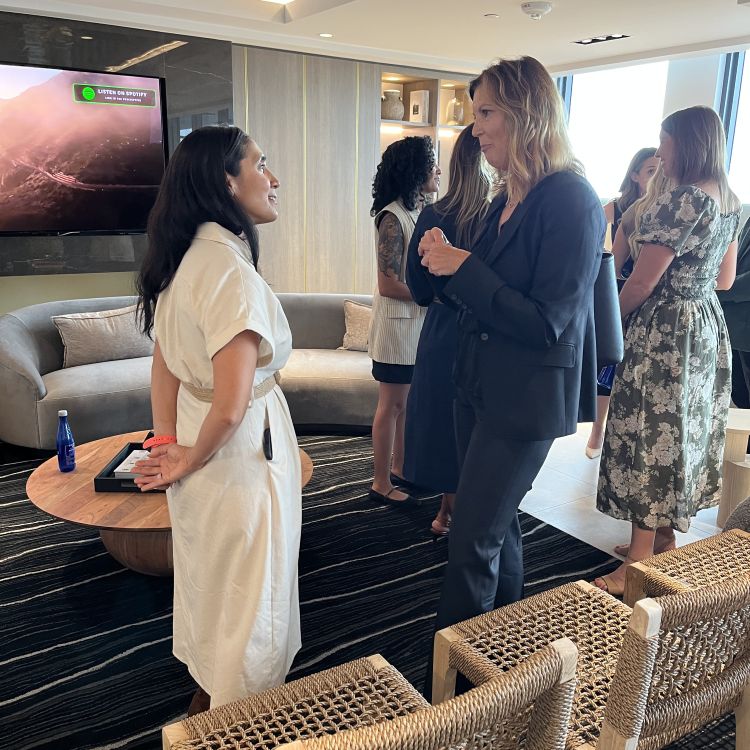
ULI’s Young Leaders Group gave her a pathway into leadership. WLI offered something slightly different: a room of women from different generations and disciplines having conversations more openly than they might in a more traditional industry setting.
She recalls a WLI tour where women from different generations spoke candidly about how much the industry had changed over the course of their careers.
“Back when there were fewer women in the room, they had to know everything,” Ebner says.
By contrast, she says she entered the industry at a time when women could ask questions and still be taken seriously. That shift matters, especially in a field where confidence, technical fluency, and relationships shape who gets offered bigger opportunities.
Ebner says women are well represented in industry areas such as design, landscape architecture, and business development. She says local leaders such as Sarah Joubert of the architecture, design, and consulting firm Gensler are examples of women with strong visibility and influence in the design world. But Ebner says gaps remain, especially in the development and developer roles that often have final decision-making authority.
“Driving projects, getting them done, that’s the next big barrier,” she says.
Part of that barrier, she says, is access: to capital, decision-making rooms, and the relationships that help people move from supporting roles to driving projects.
That is where WLI can serve as both a network and a pipeline.
Younger professional women, Ebner says, need mentors who will help them develop the technical knowledge and confidence to belong in rooms where consequential decisions are being made.
If WLI is successful over the next ten years, she hopes the industry will continue to move toward a more even gender balance across all sectors.
“There’s a day when WLI becomes unnecessary,” Ebner says, “not there to break barriers, but for camaraderie.”
Real estate and land development work often includes years of behind-the-scenes planning, legal review, engineering, financing, public hearings, negotiations, and community conversations before a crane appears or a building begins to rise.
WLI co-chair Melissa Strassner, managing member of MTS Law in St. Petersburg, works in that less visible part of the process. Her firm focuses on land use entitlements, government affairs, and moving projects through the legal and regulatory process.
“What most people don’t see is that construction is often the final chapter of a much longer story,” Strassner says.
Land-use attorneys and entitlement professionals, Strassner says, help translate a community’s vision into something that can actually be implemented.
“Our role is not simply obtaining approvals,” she says. “We help ensure projects align with comprehensive plans, land development regulations, infrastructure capacity, and long-term community goals.”
Every rezoning, development agreement, or comprehensive plan amendment contributes to how a community evolves. In that sense, Strassner says, land-use professionals help shape the physical and economic future of a place, often decades before the results are fully visible.
That long timeline makes relationships and trust especially important.
Developers need certainty and economic feasibility. Communities want to preserve the quality of life and ensure responsible growth. Strassner says the strongest projects recognize that both interests matter.
“My approach is to focus on transparency, listening, and problem-solving,” she says. “Often, conflict arises when people feel unheard or misunderstand what is being proposed. When stakeholders are brought into the conversation early, and there is a genuine effort to address concerns, better outcomes usually follow. The goal isn’t to eliminate tension. The goal is to navigate it productively.”
Barnes, Ebner, Strassner, and the other professional women involved in WLI are working to have more women lead the conversations that determine what Tampa Bay becomes.
The blue blazers are still there, but the makeup of the people in the room is changing.
ULI Tampa Bay’s next WLI event is scheduled for Tuesday evening, August 18, at Mad Dogs & Englishmen in South Tampa.
To learn more, visit ULI Tampa Bay
This story is made possible through an underwriting agreement between ULI Tampa Bay and 83 Degrees
Author

Related Articles
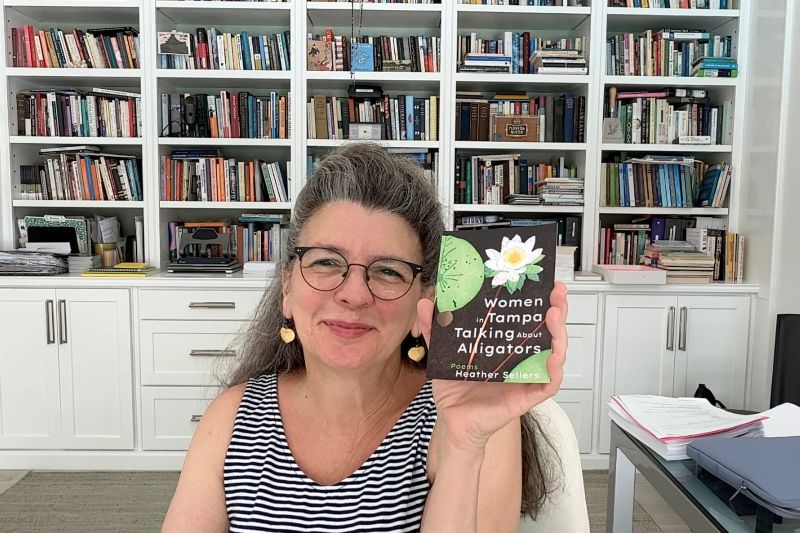
USF prof’s new poetry collection celebrates Florida’s daily rhythm
USF English professor Heather Sellers’ new poetry collection, “Women in Tampa Talking about Alligators,” is the final entry in a trilogy documenting her native Florida.
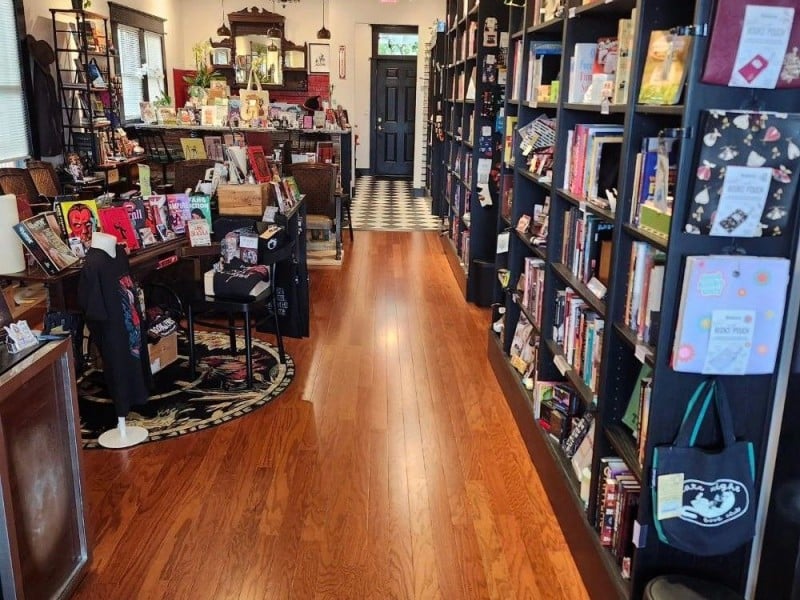
A new chapter for Tampa Bay’s independent bookstores
Across Tampa Bay, independent bookstores are making a comeback by offering a sense of place, distinct personality, and human connection that online retailers can’t match.
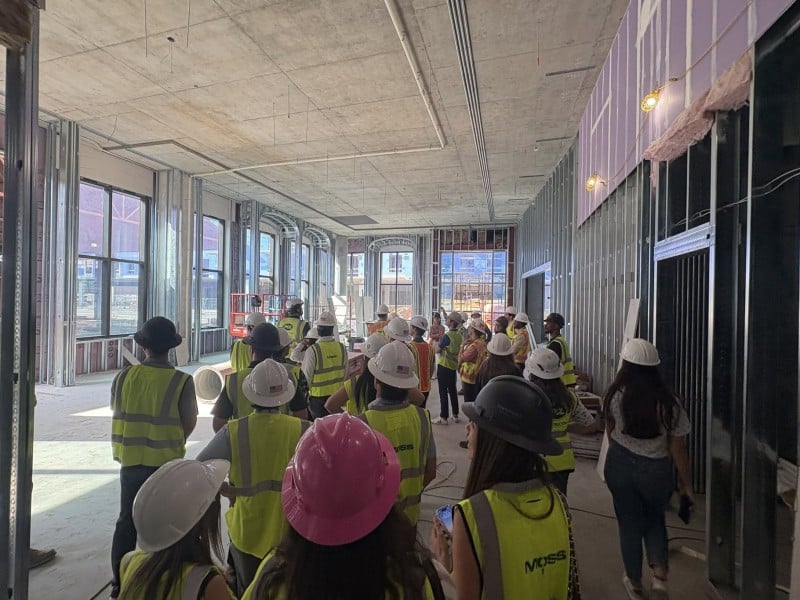
ULI Tampa Bay launches two new leadership events
Two new ULI Tampa Bay events will bring together land-use and real estate professionals for regional tours, networking, and leadership development.