Striking balance between e-bikes’ rising popularity, safety concerns
Tampa, USF officials emphasize safety messaging as rising e-bike usage brings rising crash numbers.
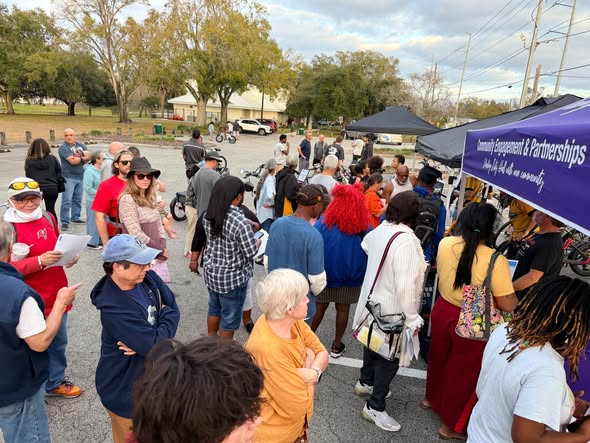
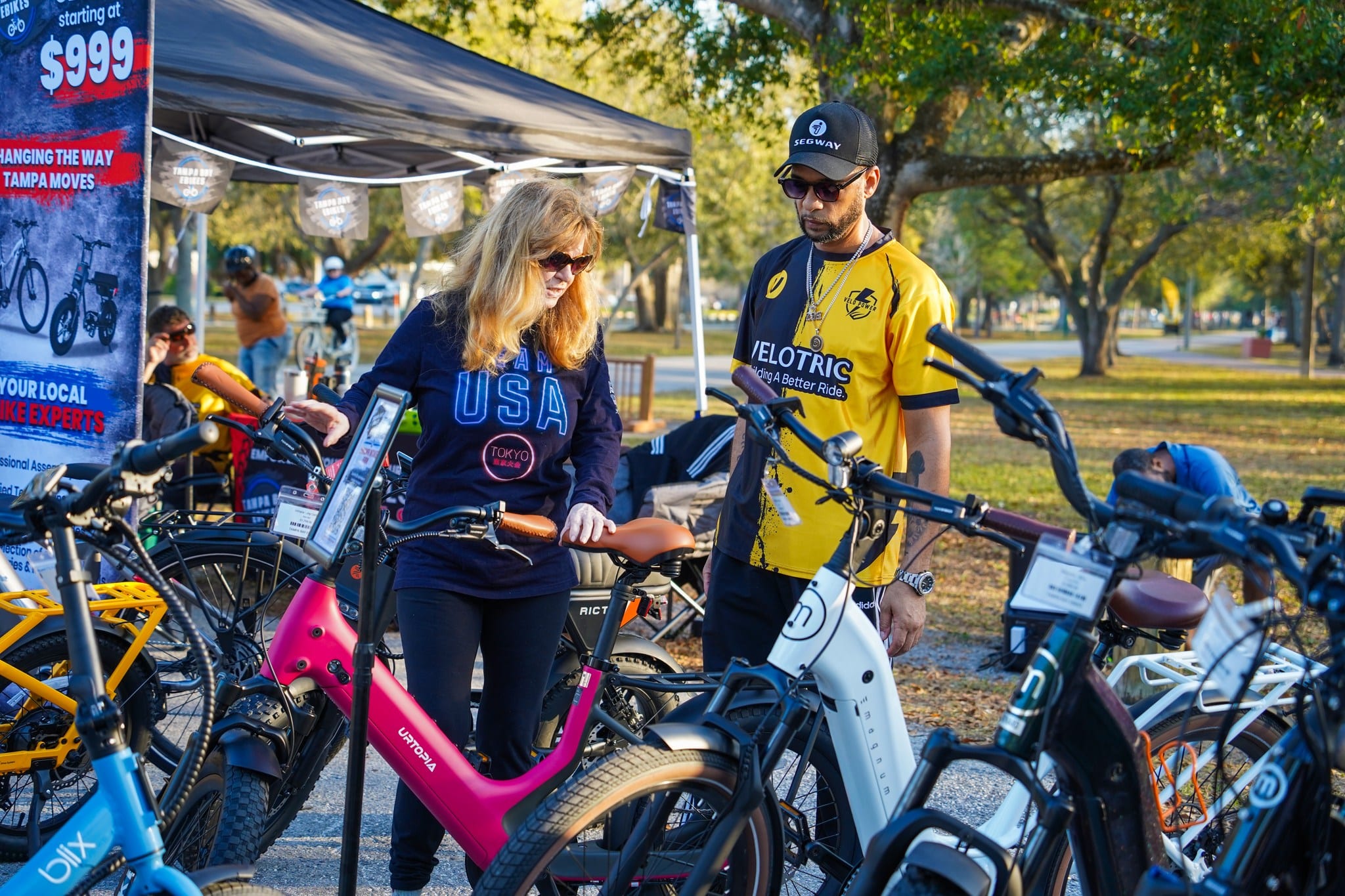
In February, scores of people turned out at Al Lopez Park to take a test ride on electric bikes and apply for the City of Tampa eBike Voucher Program, which offers city residents substantial subsidies for the purchase of e-bikes. The program is part of the city’s effort to reduce vehicle traffic and make roads safer for bicyclists and pedestrians.
After some test rides, Marie Dumont says she’s thinking of buying an e-bike to replace her bicycle.
“I’m getting older, so it’s easier. It’s easier on the joints,” she says. “You don’t have to pedal a lot, but it gets you where you need to go, and that’s what I’m looking for.”
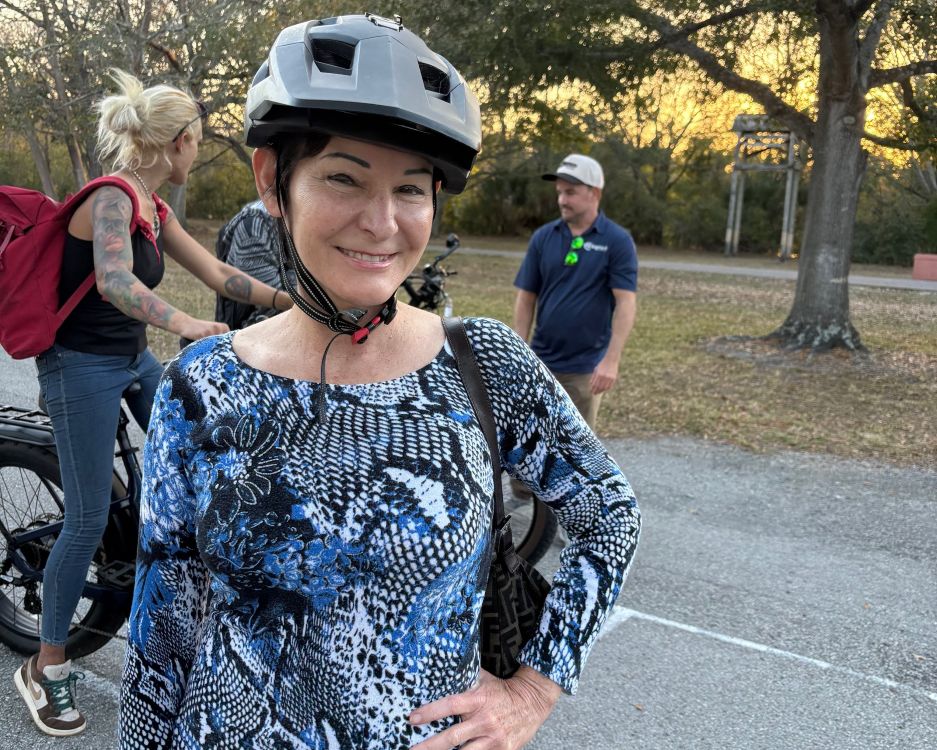
The voucher program set a record with more than 1,100 applications this year, which surpasses the previous high of 935 in 2023 and is far more than the program can accommodate. Applicants should hear back by the end of March.
As more e-bikes ride the roads and sidewalks, emergency room doctors and police are speaking out about the injuries and deaths of e-bike riders from cars and injuries to pedestrians from e-bikes.In February, the Tampa Bay Times reported there have been 28 e-bike fatalities in Pinellas, Hillsborough, and Pasco counties over the last five years. In response to growing crash numbers and safety concerns, the Florida Legislature passed a bill in this year’s session that establishes a 10 mph speed limit for e-bikes traveling within 50 feet of a pedestrian and sets up a task force to track crash incidents, injuries, and fatalities and recommend additional regulations.
The Tampa City Council previously considered regulations such as a 10 mph speed limit, but dropped the proposal after significant community pushback.
Tampa’s voucher program helps fund the purchase of class 1 e-bikes with a top speed of 20 mph at participating bike shops. They are classified as bicycles and may travel on the road or sidewalk, says Tampa Parking Planning Coordinator Austin Britt, who oversees the voucher program.
Common e-bikes’ pedal-assisted top speeds typically don’t exceed 28 mph, the maximum for the class 3 category. But some e-bikes advertised online reach speeds of 65 mph. Britt feels 28 mph is the point where things enter a gray area over whether the e-bike is now functioning as a moped and where it belongs.
The City of Tampa requires that residents who buy an e-bike through the voucher program also purchase a helmet and have an invoice from the bike shop to verify the transaction.
“Unfortunately, we can’t control the public at home,’’ Britt says with a laugh. “But we give them the opportunity to be safe.”
Safety concerns and messaging
Today, e-bikes, e-scooters, e-skateboards, and even e-unicycles routinely share the road and sidewalk with cars and pedestrians. At the University of South Florida Tampa campus, which sees about 45,000 vehicles a day, the Police Department has launched an e-bike safety campaign encouraging motorists, pedestrians, and e-vehicle riders to be more aware of each other as they move about. It asks e-vehicle riders to slow down to 10 mph when approaching pedestrians and follows in the wake of 12 reported crash incidents on campus since fall 2025 involving e-vehicles, pedestrians, and cars, including some with minor injuries. USF Police Chief Daniel urges riders to wear helmets and avoid distractions such as their smartphones.
Daniel says some people on e-bikes and e-scooters ride through campus with their phone in hand. Others have both hands on their e-scooter and try to balance their phone in between them, he says.
Motorists are required to stop for pedestrians and bicycles in crosswalks, but Daniel says that it’s often difficult for them to judge the speed of approaching e-vehicles. Another concern is that motorists can’t hear them.
“These e-bikes, e-scooters and everything, they run silent,’’ Daniel says.
“We ask them to slow down,” he adds, noting that e-vehicle users “have just as much responsibility…as you would as a driver behind the wheel.’’
USF police spread the message about e-vehicle safety through the department website and the USF Health and Safety website. They also have an information table at the weekly Bull Market outside the Marshall Student Center. Daniel says his department plans to look into creating an e-bike safety course.
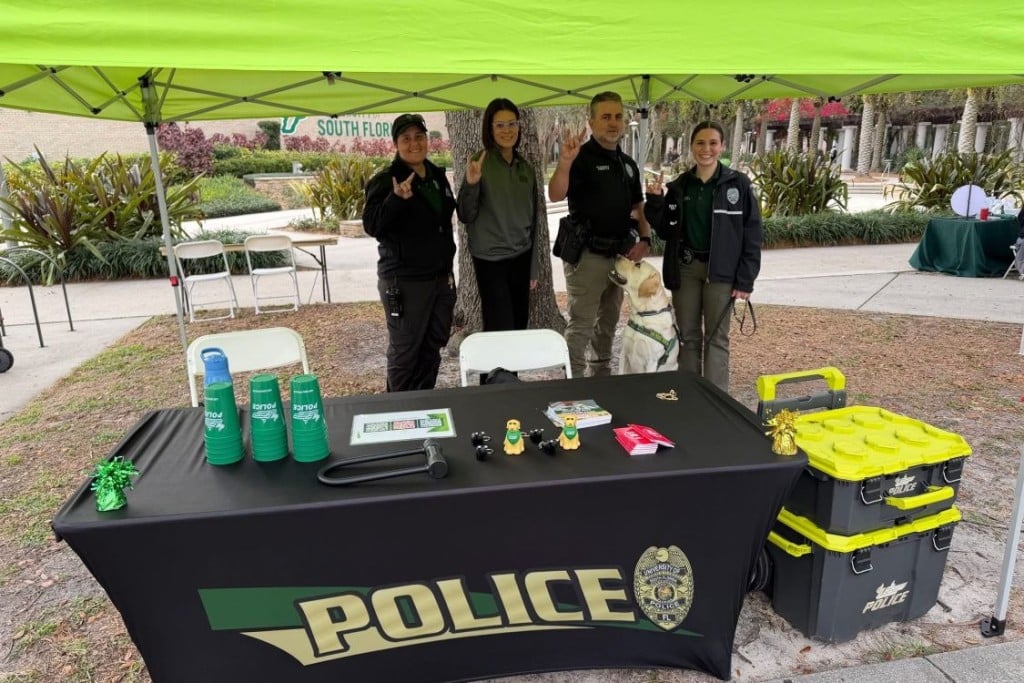
“We do work closely with the USF Center for Urban Transportation,’’ he says. “We may be able to partner with them and our crime prevention department to put on such a program, or work with the Department of Transportation through the community traffic safety team to see if we can develop something like that,’’ he says.
Britt thinks e-bike usage is reaching the point where the city has to have an educational program addressing safety.
“We are seeing an influx…People want this mode of transportation,” he says.
He favors a campaign that educates e-bike riders, pedestrians, and motorists on how to interact safely with one another.
“I think we’re going to be moving in that direction, which for me is a very positive way to go forward, to make sure everyone’s doing it safely,’’ he says.
Dumont says she plans to ride her e-bike only in safe areas free of motorists.
“I live by the Riverwalk. I can ride it the whole way,’’ she says, “so that’s a perfect thing. Plus, I like to go out in the woods. I like to trail ride, so that’s what I would want to use it for. With an ordinary bike, I wouldn’t be able to do it.’’
She’s not planning to ride in traffic.
“I don’t even like driving in traffic, much less riding a bike in traffic,’’ she says.
For more information, go to Tampa e-bike voucher program and USF e-scooter safety
Author

Related Articles
The evolution of the Tampa Riverwalk
Over five decades, the Tampa Riverwalk has gone from an idea to a key and expanding piece of the city’s transportation network.

5 things to know: Ybor 7th Ave. rebricking finishes phase II
The phased project will eventually restore Ybor City’s 7th Avenue to brick from Nuccio Parkway to 26th Street.

Photos: Craft’s History & Cigar Cruise celebrates Ybor’s 140th anniversary
Photos from Craft’s History & Cigar Cruise celebrating Ybor City’s 140th anniversary.