Manor Riverwalk construction begins
Luxury residential tower Manor Riverwalk is the first piece of developer the Related Group’s planned Riverwalk District.
For the last decade or more, a prime piece of land along the west side of the Hillsborough River near Kennedy Boulevard has sat mostly idle.
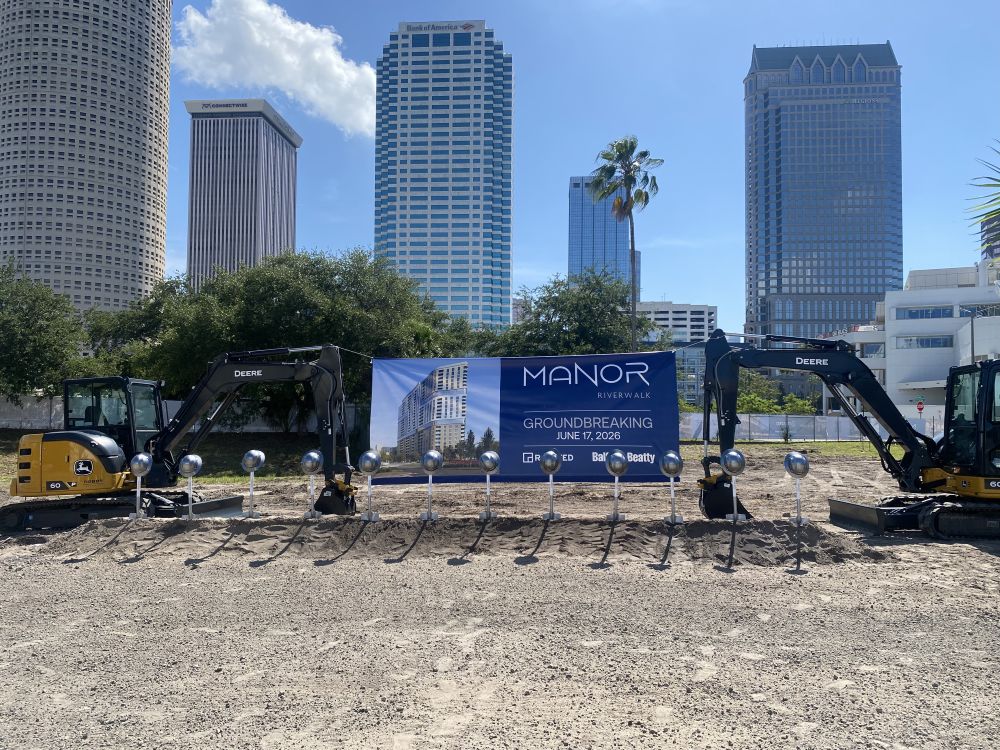
In recent memory, it has been home to little more than dirt and dreams. During a June 17th groundbreaking ceremony on Wednesday, Tampa city leaders and developer the Related Group tossed dirt from silver shovels to mark the beginning of the property’s transformation – the start of construction on the 26-story, 369-unit luxury residential tower Manor Riverwalk.
“There used to be a Denny’s here,” Mayor Jane Castor told attendees, gesturing to a site that is now poised to become part of the city’s expanding riverfront skyline.
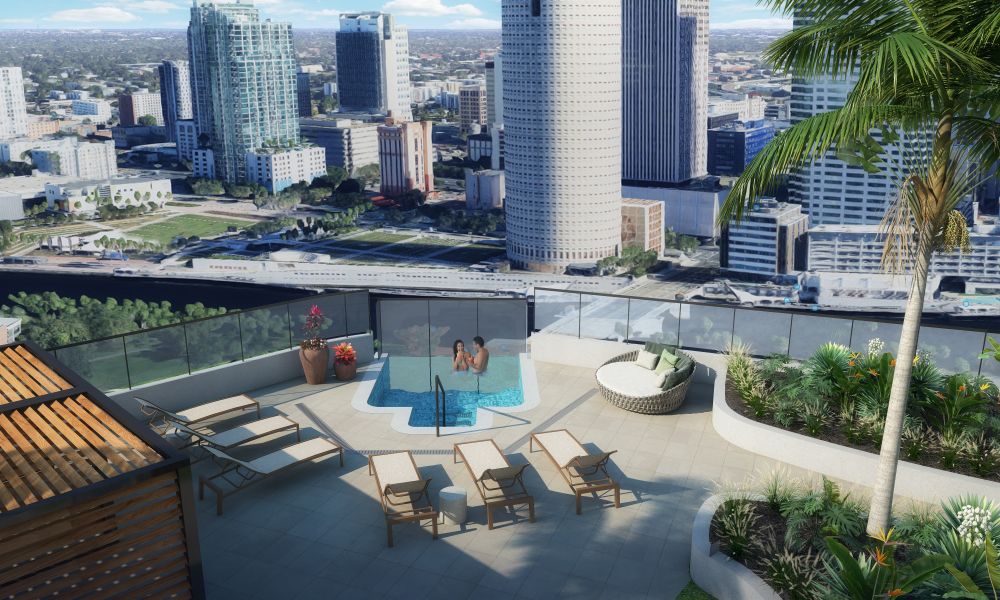
Designed by Miami-based Arquitectonica, with interiors by ID & Design International, Manor Riverwalk will rise adjacent to WFLA News Channel 8 studios and anchor the Related Group’s Riverwalk District, where full plans include 1,229 residences across five buildings ranging from 12 to 44 stories, 37,000 square feet of ground-floor retail, and over 1.4 million square feet of total leasable space on 5.8 acres. The district will fill in one of the last remaining open spaces along the Hillsborough River near downtown and complete sections of the West River BUILD Riverwalk expansion.
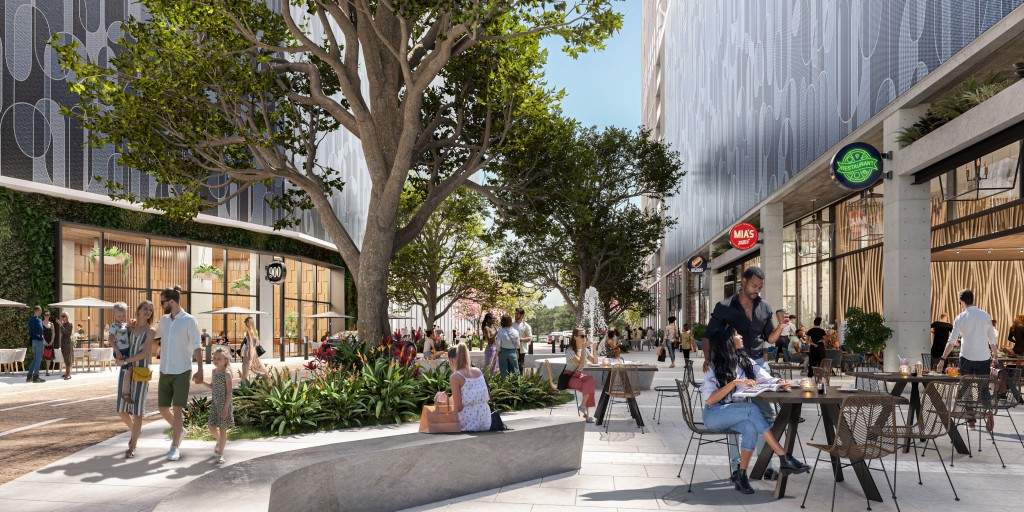
The project will also transform Parker Street into a woonerf, a Dutch term for “living street” or “shared space” that is used to describe a street design concept that blurs the lines between sidewalks and roads, allowing pedestrians, cyclists, and slow-moving vehicles to share the same space safely, according to Planetizen.
For Tampa City Councilman Alan Clendenin, whose district includes the site, the groundbreaking represents more than the start of another residential tower. He sees the parcel as a critical connector between downtown and the west side of the Hillsborough River, including the Kennedy Boulevard corridor and the University of Tampa.
“That whole area is going to transform,” Clendenin says. “Having that kind of density on the west river can be a catalyst. Kennedy Boulevard has unrealized potential, and the idea of connecting downtown to the airport through better transit is very exciting.”
At the same time, Clendenin says Tampa’s challenge is to pair new density with architectural quality, public access, and a stronger sense of place.
“I don’t want to turn Tampa into Brickell,” he says, referring to the neighborhood in Miami famous for its nondescript highrises. “I don’t care for sterile development without community. We need to challenge developers to do better, to create architecture and places of significance.”
Related Group has been active in Tampa for more than a decade, completing more than 2,000 housing units across income levels and advancing at least four additional projects in the city. Company leaders say that activity reflects a long-term belief in Tampa’s trajectory as one of Florida’s premier urban destinations.
“In Florida, I see two major growth areas: South Florida (Miami) and Tampa Bay,” said Related Group Founding Executive Chairman Jorge Pérez.
Often called the “condo king of Miami,” Pérez is credited with building more than 100,000 residential units in the South Florida region.
“We don’t just want to build buildings,” Pérez said. “We like creating communities where people can live, work, and recreate.”
For Castor, the project is part of a broader transformation of a stretch of the city that has not always felt connected to the river or the public life of downtown.
“In the ’80s, this area was prostitutes and plasma donation centers,” Castor, a former Tampa police officer and chief, told attendees at the groundbreaking event. “What it will become will hopefully be far more family-friendly, inviting, and full of life.”
That evolution is already visible along both sides of the Hillsborough River, where public and private investment have steadily extended the Riverwalk, brought new residential density downtown, and reshaped former industrial or underused parcels into parks, apartments, hotels, and public gathering spaces.
Clendenin says some earlier riverfront development did not always fully face or engage the river, and that is a missed opportunity. He hopes the next wave of urban development in Tampa is more intentional.
“The river is one of our greatest assets,” he says. “Development should open itself up to the river, not turn its back on it.”
He also sees Manor Riverwalk as part of a larger conversation about how people move through the urban core. Clendenin says discussions about transit, the TECO Line Streetcar, and better connections between downtown, Tampa Heights, North Hyde Park, and eventually Tampa International Airport are gaining momentum.
“The will of the people is there,” he says. “People are finally fed up with having to rely on cars for every trip.”
As Tampa continues to grow, Clendenin says the goal should be a more connected, walkable, and active urban core.
“My vision is to move toward an urban core where you don’t need a car,” he says. “That means better transit, better public spaces, and development that actually contributes to the life of the city.”
For more information, go to Related Group.
Author

Related Articles
ULI Tampa Bay launches two new leadership events
Two new ULI Tampa Bay events will bring together land-use and real estate professionals for regional tours, networking, and leadership development.
Tampa’s West Riverwalk expansion rolling along
Part transportation project, part economic development catalyst, Tampa’s West Riverwalk expansion is taking shape.
Transportation projects will help shape Westshore’s future
Massive regional transportation projects and local infrastructure improvements will impact Westshore’s evolution into mixed-use district