Reel Action In Tampa Bay: Filmmaking Creates Jobs
Around the Tampa Bay region, filmmakers put people to work investing their time and talent thanks to the benefit of a tax incentive designed to make Florida more attractive for doing business — and that’s just the first act. Acts 2, 3, 4, etc. are still to come.
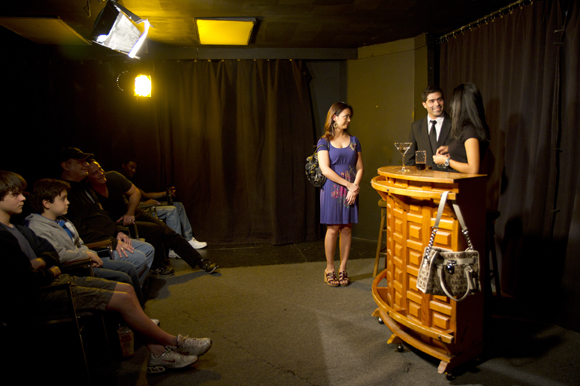


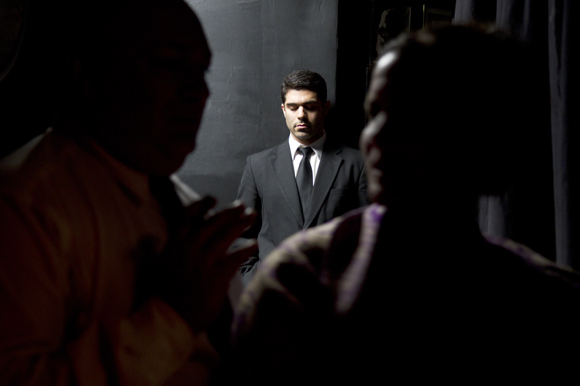
Steve Tatone of Sarasota knew he had a hot story and a great soundtrack behind the film he wrote, “Beautiful Noise,” a twisty drama and romance between musicians. The producer and director also knew he needed financing to bring the script to the screen.
Part of that came in the form of a tax credit for which his company, Midnight Pass Productions, qualified under the Florida Entertainment Industry Financial Incentive Program. Effective July 1, 2010, the program provides $242 million in transferable tax credits for projects produced in Florida over the next five years.
That means an independent film like Tatone’s can earn at least a 20 percent tax credit for spending $100,000 of its budget on Florida residents’ wages, vendors and supplies. Feature films, TV shows and certain commercial and digital-media projects must spend a minimum of $625,000 to qualify for the same percentage. Music videos and video games also can apply.
“Finding out we qualified for that incentive — it was such a mark and a badge of integrity,” says Tatone, who shot entirely on location in Sarasota and Myakka City. “It really helped legitimize us.”
Tatone plans to premiere “Beautiful Noise” in April at the Sarasota Film Festival and Sunscreen Film Festival. He thinks the incentive program will help maintain a strong base of talented actors and crew in Florida and the Tampa Bay region. In the past, locals with film and television experience have traveled to other states like Georgia and Louisiana for work because of financial incentives offered to filmmakers there.
“What they’ve done is an incredible game-changer for Florida,” Tatone says of the Legislature and then Gov. Charlie Crist, who enacted the program. “It can bring in big guys like a James Cameron and help little guys like me.”
Clearwater producer Tony Armer agrees. Executive director of the Sunscreen Film Festival, Armer shot a pilot, “Terminal Kill,” written by two members of the local group Screenwriters of Tomorrow, and says he has secured the tax credit for a sci-fi comedy, “Mad Science U,” to begin filming in the Tampa Bay region in October.
“I can already see that it’s started to drive more business to the state,” Armer says. “It’s really outstanding to keep local filmmakers here and open it up to larger projects.”
Creating A Win-Win-Win For Film
The refundable tax-credit program is the largest allocation of this sort that Florida has offered since a $25 million cash-rebate program in the fiscal year 2007-2008, says State Film Commissioner Lucia Fishburne.
To be eligible, productions must submit a budget, script or story boards and be able to start within a certain time frame; they can extend that window or reapply if they run into financing problems.
Each eligible project can earn a transferable tax credit of at least 20 percent of its budget spent in the state — up to 30 percent total for filming during the off-season and for having family-friendly content (no sex, nudity, smoking or foul language).
If the production company is not based in Florida or has no Florida tax liability, it can sell the tax credit to a Florida business for 90 cents on the dollar, says Sarasota Film Commissioner Jeanne Corcoran. So the production company recoups its money, a Florida company gets a tax credit, and local cast, crew and other businesses related to the production benefit.
“It’s a win, win, win,” she says.
About 200 projects have applied for the tax credit during this current fiscal year, Fishburne says.
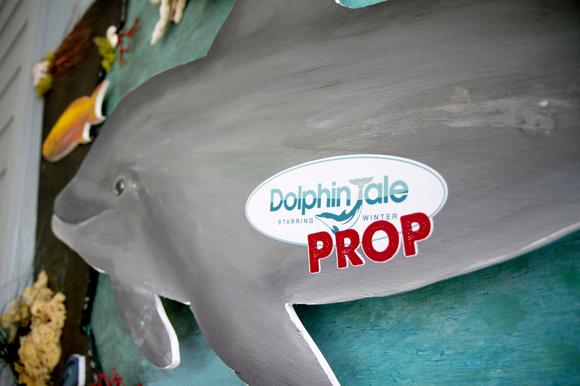
Some current recipients are posted on the Web page of the Governor’s Office of Film and Entertainment. They include several projects involving Tampa Bay companies, such as “Zero Energy America,” a documentary by Bluewater Media in Clearwater featuring Mark Rutenburg Homes; and “Miami 24/7,” a television series produced by Sanborn Studios in Lakewood Ranch; as well as big-budget studio productions such as “Transformers 3,” “I Am Number Four” and “Dolphin Tale,” which filmed in St. Petersburg and at the Clearwater Marine Aquarium.
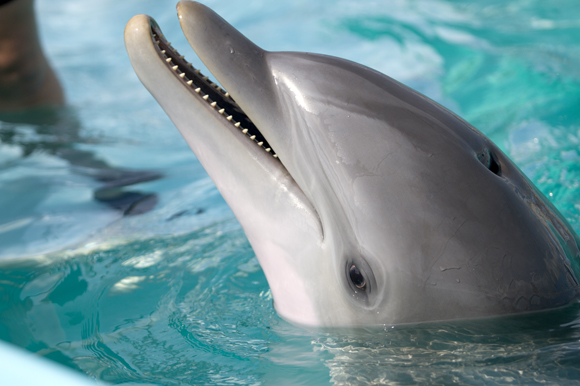
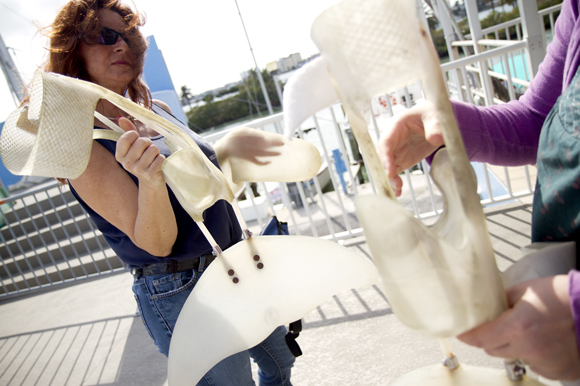
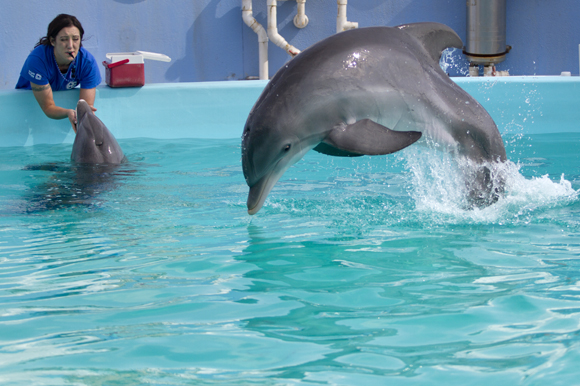
Produced by Alcon Entertainment, “Dolphin Tale” is scheduled for release in September. Steven P. Wegner, that film’s executive producer, says roughly three years ago he had obtained the rights to tell a story about Winter, the aquarium’s dolphin with a prosthetic tail who inspires war veterans and disabled children alike.
But because the nature of filmmaking warrants going where the production gets the most bang for its buck, Wegner says the company at first considered filming in North Carolina and transporting Winter there.
Hiring Florida Talent
The tax credit “came along at the perfect time,” he says, enabling the project to film in the Tampa Bay region at a much cheaper cost. “It made the difference between us getting green-lit or not.”
Wegner declined to release the film’s budget but says it is in the $40 million range. The film stars Morgan Freeman, Harry Connick Jr. and Ashley Judd, as well as three local actors: Megan Lozicki, Michael Roark and Jim Fitzpatrick, a TV and film veteran since the 1970s who has appeared regularly on “All My Children” and “Star Trek: Enterprise.” All three are involved with the Performers Studio Workshop in Tampa.
“I was pleasantly surprised by the talent here,” Wegner says. “We hired a number of local film graduates as production assistants.”
He also was impressed by the weather. This was the first shoot Wegner could remember where rain didn’t hamper the schedule. “On a bad weather day, we actually filmed it for our hurricane scene to save money,” he says.
“Dolphin Tale” is the perfect example of a trickle-down effect for the local economy, says Wegner and Jennifer Parramore, director of the St. Petersburg/Clearwater Film Commission. The out-of-town cast and crew stayed among the Sandpearl Resort, the Hyatt Regency Clearwater Beach Resort and Spa and other hotels. They dined at Bob Heilman’s Beachcomber, Forlini’s Ristorante & Bar, Frenchy’s Rockaway Grill and The Bait House. The production paid St. Brendan Catholic Church for use of its hall as a dining area, and it made a deal with a local cleaning service near the aquarium to launder dozens of towels daily.
“This particular project was like the perfect storm of how things go right. We’re very excited about it,” Parramore says.
Parramore says in the past, Florida ranked third behind New York City and Los Angeles in terms of favorite shooting locations. Florida had an especially good film industry and crew base in the 1980s and 1990s. Then Canadian provinces and other states started offering incentives that made shooting in locations such as Louisiana and Atlanta more affordable.
“Every single year, the state of Florida has had an incentive [for filmmaking], we’ve had projects flocking to us,” she says. “It is an instant job creator. That’s the message we’re carrying to the new governor.”
Locally, the incentive program seemed to get off to a rocky start after the A&E crime drama “The Glades” decamped to the Miami area after filming part of its premiere at the Don CeSar Beach Resort. An actor and a producer on the project criticized the local film commissions in a news report as not being savvy or supportive.
Fitzpatrick, the actor who is appearing in “Dolphin Tale” and who has his own production companies, says he too had heard that Fox Television Studios, which produces “The Glades,” wasn’t courted correctly.
“Unfortunately, the way it goes here, the local talent and crew are not promoted,” Fitzpatrick says. “The first thing out of their mouth is, ‘We have hotel rooms for you. We have beaches.’ Obviously.”
Parramore and Dianne Jacob, senior VP of marketing with Tampa Bay & Co., which oversees the Tampa Film Commission, says they convinced “The Glades” to shoot in the Tampa Bay region for five days instead of the one day the production had planned. To them, the decision to move the series to the Miami area came down to wanting a particular tone for the series (“We don’t have the edginess that Miami is known for,” Jacob says) and wanting to save money. The same company that produces “The Glades” produces the USA series “Burn Notice,” which already has established facilities in Miami.
“You can always find someone who wants to complain,” Parramore says. “I lost no sleep over it, I’ll tell you that. I think the area did fine work.”
Creating Appropriate Tax Incentives
All three local film commissions say they offer online directories of local talent and other services to help location scouts, production managers, and producers.
In Tampa, the film commission is funded through the bed tax of hotel-room stays. That’s “a difficult proposition,” Jacob says. “The way that film should be measured is through job generation, because you’re putting crews to work, post-production work.”
The incentive program has helped to drum up interest in Tampa, which is a plus for people with film and TV experience here, she adds. The convention and visitors bureau had to lay off several people, including a full-time film manager, and has not been as proactive as it was in the past in pursuing productions, Jacob says. “We can no longer afford to send people to the trade shows and the festivals.”
By contrast, in addition to the state tax-credit program, Sarasota County has established a separate cash rebate of a total of $250,000 available for entertainment production and post-production in the county for the fiscal year ending Sept. 30, Corcoran says. Productions can recover 100 percent of city-government fees, such as parking and permits, and up to 20 percent of the costs spent through local businesses such as caterers and crew.
“Hopefully, if it’s successful, we’ll do it again,” Corcoran says.
Corcoran imagines that entertainment production will blossom in Sarasota especially over the next few years. The incentive programs, the opening of Sanborn Studios’ 30,000-square-foot facility in Lakewood Ranch in October, and a $1.7 million grant that Ringling Collge of Art and Design obtained to put in an extensive, state-of-the-art production facility all bode well, she says. “We’re growing by leaps and bounds.”
The entertainment business reaches into several aspects of the community, not just locations but theaters who do set construction and makeup, she says. Although a lot of work involves public-service announcements, local commercials and corporate video, everyone appreciates the dazzle and the payday bigger productions bring.
“That bread-and-butter work is very important to keep a crew base in our area,” Corcoran says. “Is it enough for them to pay their mortgages and get their kids braces? No. We need more bigger, better, larger projects any time we can get them.”
Wegner, the executive producer on “Dolphin Tale,” says he would love to come back to the Tampa Bay region on another project. Currently, he is considering a Clearwater premiere for the film, as well as a press junket. “We think everyone should meet Winter.”
Tatone, the independent filmmaker, says he hopes the incentive program is successful enough over its five-year run to lure more opportunities here.
“It does inspire those of us who live here and like to sleep in our bed at night,” he says. “I know people who are looking forward to moving back here once these projects come to Florida.”
Valerie Kalfrin is a Lutz-based freelance writer who loves to read screenplays. She is studying film at the Morean Arts Center in St. Petersburg. Comments? Contact 83 Degrees.
Related Articles
Improv community rallies around Ybor City’s Countdown festival
After Countdown Improv Festival co-founder Justin Peters was diagnosed with brain cancer, the improv community stepped up to make sure the show goes on.
Palladium Theater renovation: Balancing modern upgrades, historic preservation
The $13 million renovation of St. Petersburg’s historic Palladium Theater begins in August.
July arts: “Predictor” at Powerstories, “Art in the Air” in Westshore, Tampa Archives Awareness, more
A look at the arts events and exhibits around Tampa Bay in July