Tampa Bay History Center launches timeline exhibit
“Tampa Bay Timeline” is a gateway to 14,500 years of history.
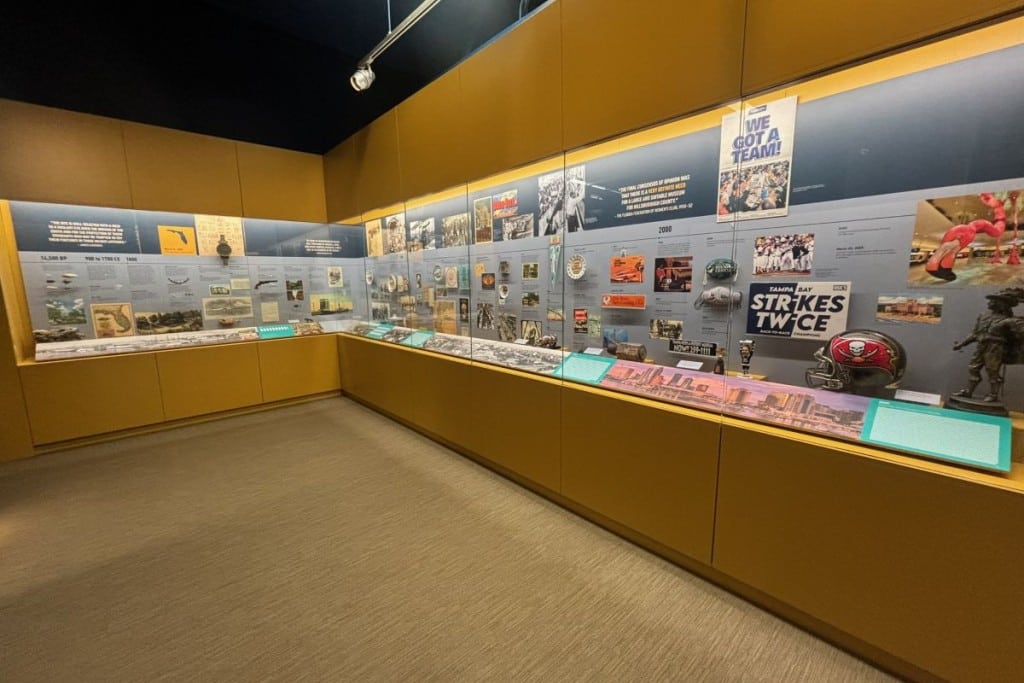
If the Tampa Bay History Center were a critically acclaimed book instead of an award-winning history museum, its newest exhibit would be the introduction.
“Tampa Bay Timeline” traces 14,500 years of West Central Florida’s history, from Indigenous peoples to the region’s recovery from the double whammy of hurricanes Milton and Helene. It moves through several centuries of history and the region’s dramatic population growth from 9,000 to 3.4 million.
During a January 30th ribbon-cutting ceremony organized by the Tampa Bay Chamber of Commerce, Tampa Bay History Center Director of Curatorial Affairs Michelle Hearn says the exhibit shares the story of a region rich in history and serves as an introduction to the center’s other permanent exhibits.
“The timeline is designed to give visitors and new residents a concise overview of Tampa Bay’s history while being a starting point for deeper exploration…We really hope the timeline serves as the beginning of many conversations on what it means to live in Tampa Bay, who we were, who we are, and who we want to be,” Hearn says during the event.
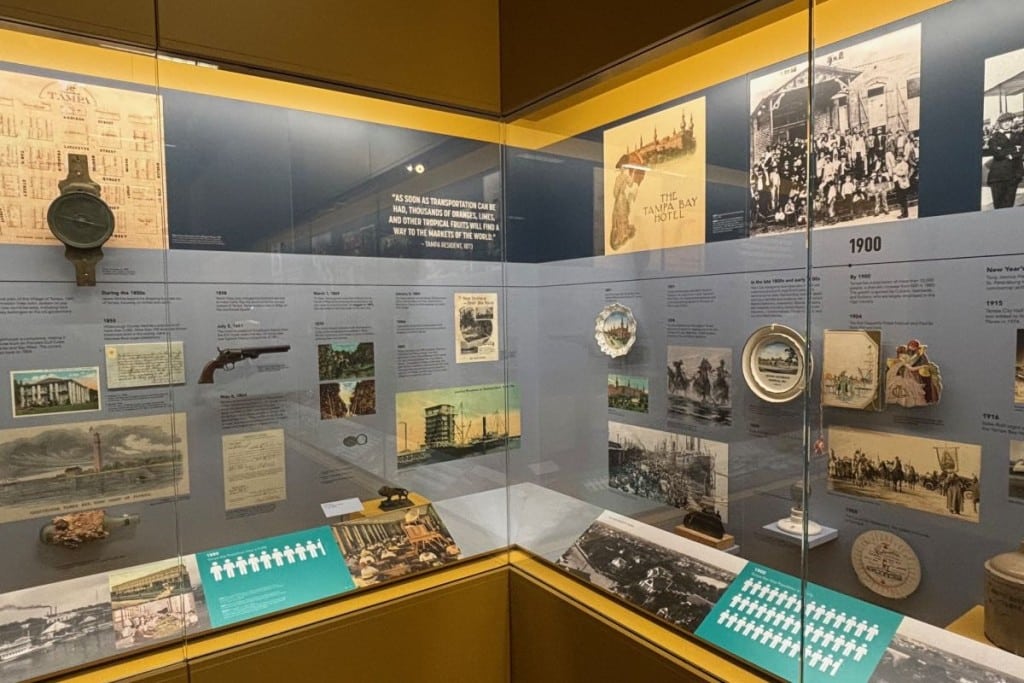
There’s the early 16th-century arrival of the Spanish explorers who brought the cattle and citrus industries. There’s the story of Angola, the early 19th-century community of formerly enslaved and freeborn people of African descent in modern-day Bradenton, which future U.S. President Andrew Jackson ordered destroyed in 1821. There are the establishment of Fort Brooke in 1824, Florida statehood in 1845, and the incorporation of the Village of Tampa in 1849.
The timeline highlights key events in the fight for civil rights and liberties, including Cuban nationalist leader José Martí’s speeches on the steps of the Vicente Martínez Ybor cigar factory, the 1937 5,000-women anti-fascist march from Ybor City to City Hall, and the 1960 Woolworth’s sit-ins to desegregate lunch counters. There’s more than 120 years of the Gasparilla parade and a half-century of professional sports, starting with the Tampa Bay Buccaneers, and moving through the Tampa Bay Lightning’s back-to-back Stanley Cup championships.
Hearn selected approximately 75 artifacts from the museum’s permanent collection of over 100,000 historic items for the exhibit. There are beads worn by members of the Seminole Tribe of Florida, military buttons from Fort Brooke, John Jackson’s early survey map of the City of Tampa, and a whiskey jug from the White Rose Saloon, which closed in 1915 as Prohibition laws began to take hold. The most recent addition to the museum’s collection in the exhibit is a late-19th-century statue of fictional Spanish nobleman Don CeSar, which The Don CeSar donated in 2025, when the historic St. Pete Beach hotel reopened after extensive damage from the double whammy of hurricanes Milton and Helene in 2024.
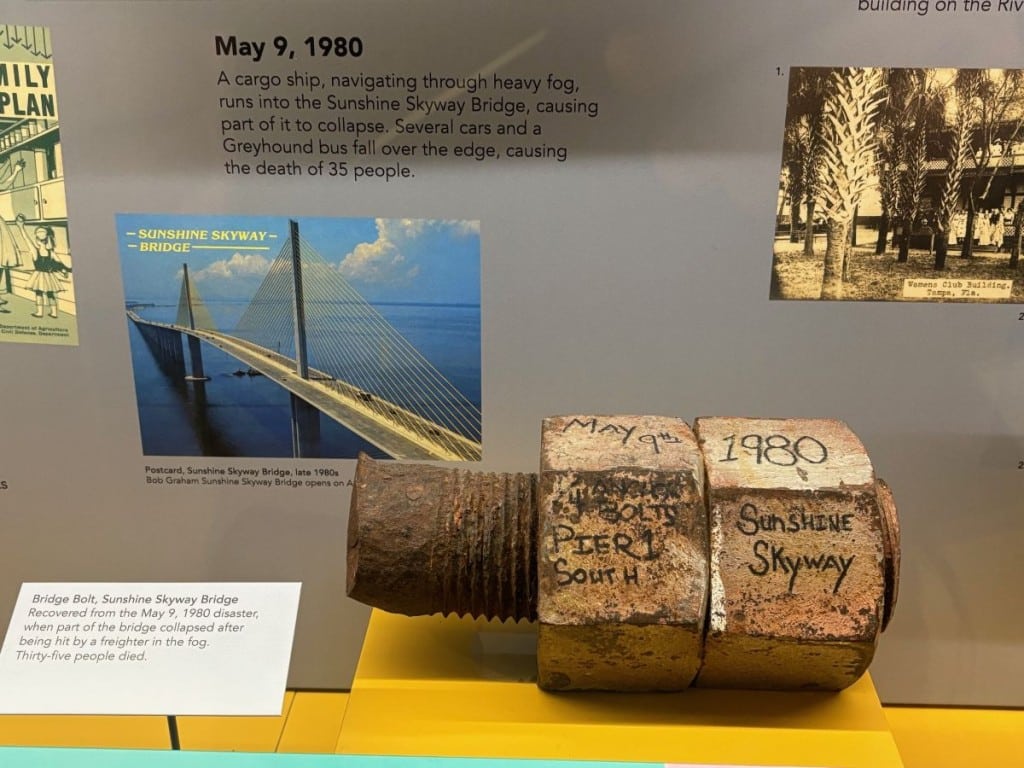
During the January 30 event, Rodney Kite-Powell, Director of the Touchton Map Library at the Tampa Bay History Center, says one of the more poignant items on display is a large bolt from the original Sunshine Skyway Bridge. The southbound span of the bridge collapsed in 1980 after a freighter hit a support column, a disaster that killed 35 people. A member of a salvage crew recovered the bolt and donated it to the History Center, Kite-Powell says.
“We wanted to make sure there was a way to memorialize that,” he says. “Not all of our history is fun like Gasparilla.”
New Tampa Bay History Center President and CEO Audrey Chapuis says, as a newcomer to the Bay Area, the exhibit’s “timing is absolutely fantastic for me.”
“This is an orienting exhibit for anyone,” Chapuis says. “I think you’re all witnessing great change in Tampa and the region, and this is an orienting, anchoring experience. I think having our shared story is incredibly important to reinforce a Tampa Bay identity.”
“Tampa Bay Timeline” is funded by Hillsborough County government and Tampa Bay History Center donors.
For more information, go to Tampa Bay History Center
Author

Related Articles
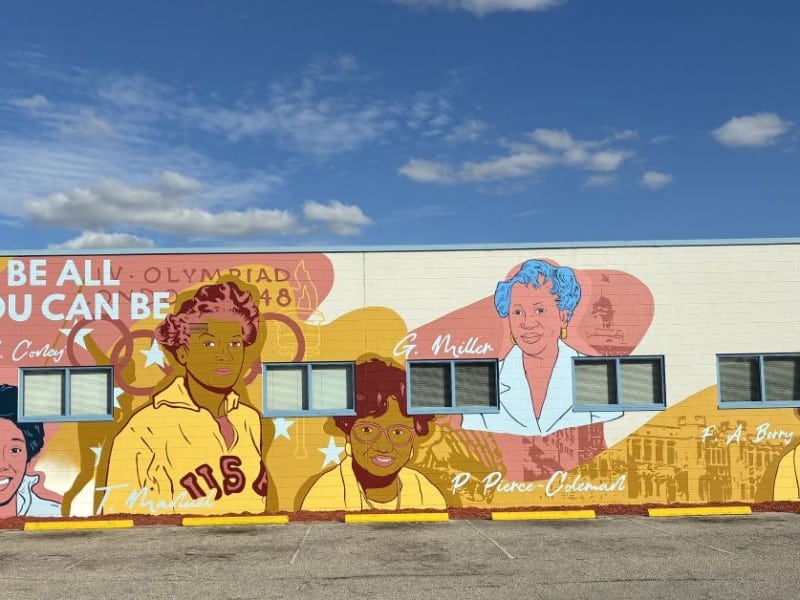
East Tampa mural celebrates past, inspires future
“Be All You Can Be” honors six African-American women who left their imprint on East Tampa.
Westshore Alliance plans banner year for public art
Public art coming to Westshore District in 2026 includes “Art in the Air,” “Kinetic Ring.”
World’s largest rubber duck is Clearwater’s new snowbird
The 61-foot-tall public art installation is at Clearwater’s Coachman Park until January 26th.