Talking historic preservation with Preserve the ‘Burg’s Manny Leto
Preserve the ‘Burg’s Manny Leto discusses the economic and cultural benefits of historic preservation.
As executive director of Preserve the ‘Burg, Manny Leto works to keep St. Petersburg history alive by helping save historic buildings and neighborhoods.
He says a great economic benefit comes to cities that mix the old with the new and points to St. Pete’s Central Avenue as a good example. With its plentiful shops and restaurants, the corridor is a key component of the city’s reputation for walkability. And 60 percent of the buildings along Central from First Street to 34th Street are more than 50 years old, according to a 2024 report on the economic benefits of historic preservation in St. Petersburg by PlaceEconomics, a Washington D.C. consulting firm.
“What that tells me is that Central Avenue is succeeding because of its inventory of historic buildings, historic resources, that make it possible for local businesses to thrive,’’ Leto says.
They are more easily adaptable than new buildings because of their size and cost to lease, he says.
“If you like local businesses, then we need to make sure that we are maintaining historic buildings because that is where local businesses are located more commonly,’’ Leto says.
Sharing St. Pete’s story
Preserve the ’Burg was founded in the late 1970s during a national movement to preserve historic structures and neighborhoods, Leto says. The organization gets its message out in two main ways: advocating for and aiding developers who want to preserve historic structures and through walking tours of historic neighborhoods.
“I think with any city, any good city, you want to see the layers of that city’s history reflected in its architecture. The architecture of the city tells you its story,’’ Leto says. “You think about these great European cities, or great American cities, you’re seeing a mix of old and new. And these places, when we’re talking about character, we’re really talking about those things that make a city unique.’’
Over the years, Preserve the ‘Burg has joined the effort to establish historical designations for the Polish-American Society clubhouse on Beach Drive Southeast, the home of beat generation writer Jack Kerouac, Melrose Clubhouse, a segregation era civic and recreation center for Black citizens, the Mediterranean Revival-style YMCA building downtown, and Trinity Lutheran Church, among others.
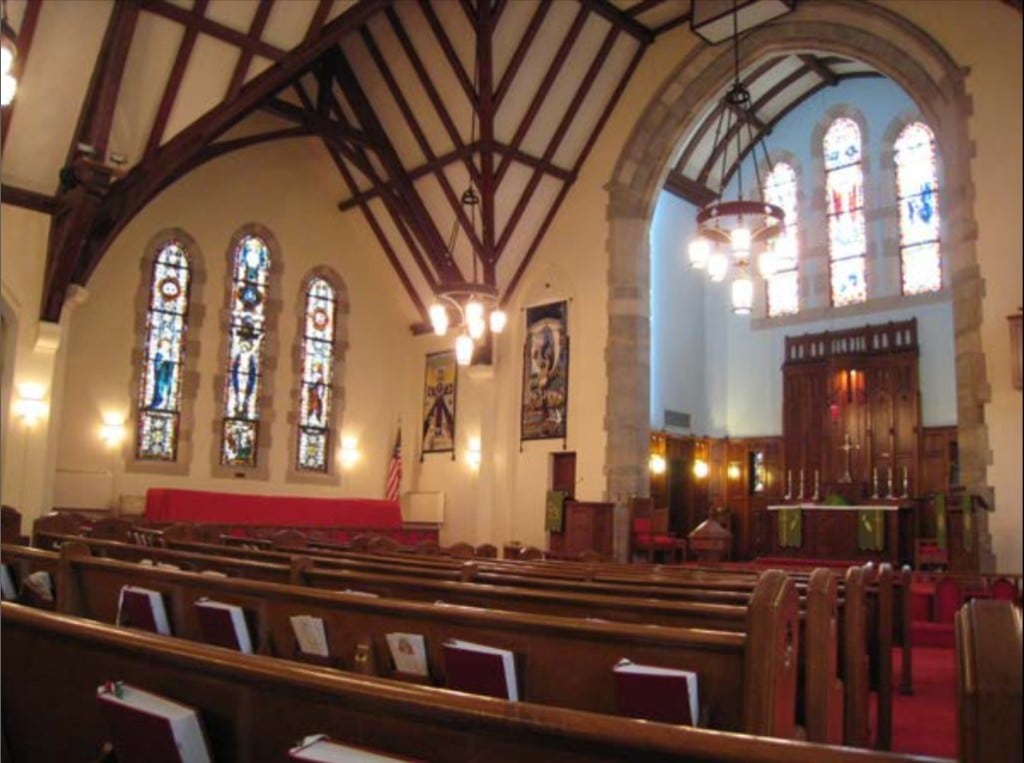
The organization celebrated another milestone at the end of 2024, when the St. Petersburg City Council voted to designate the Mirror Lake neighborhood downtown a historic district.
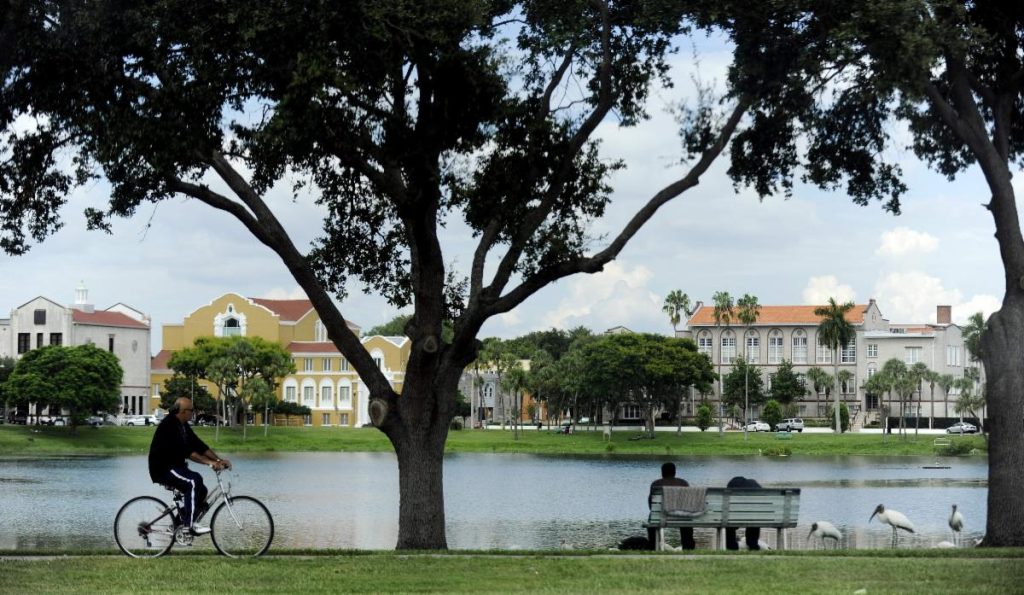
Mirror Lake, home to the Coliseum and the famous St. Petersburg Shuffleboard Club, is the first neighborhood so designated in several years, Leto says. The city now has 11 locally designated historic districts and five larger districts listed on the National Register of Historic Places, according to the PlaceEconomics report.
“It is a way for the city to maintain the character of a particular neighborhood or particular area,” Leto says. “There would be certain design standards, and it would be more difficult to demolish a historic structure or significantly alter it. Not impossible, but the idea would be to preserve that historic character while still allowing for new development. You see new development projects happening at Mirror Lake and in other places.’’
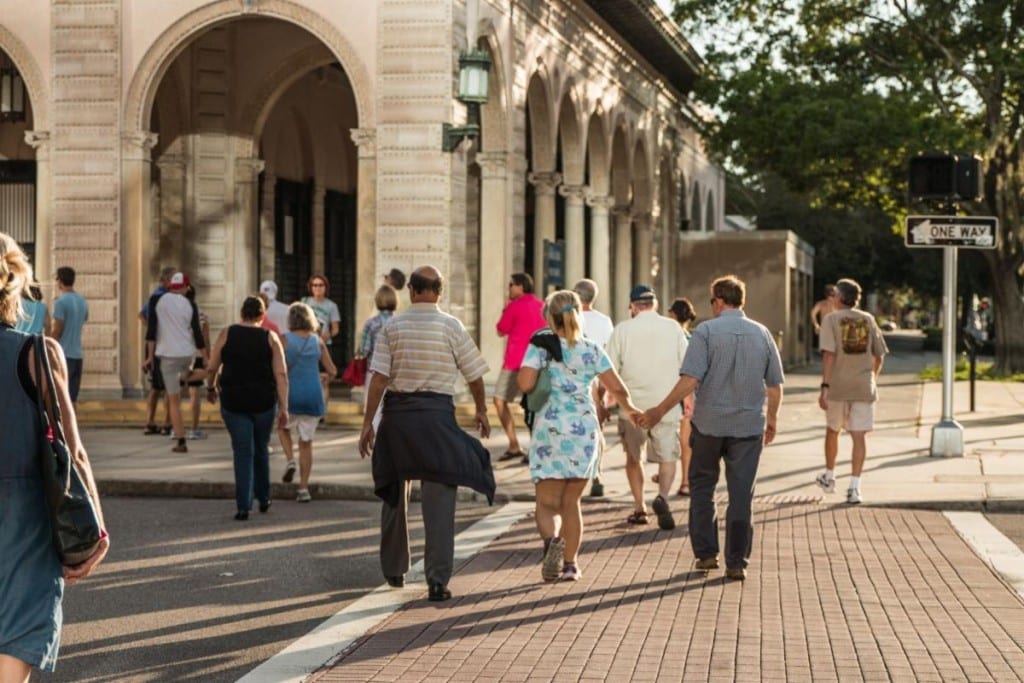
To show the benefits of saving the city’s history, Preserve the ‘Burg conducts tours of historical neighborhoods. Cost is $20 per person, $10 for Preserve the ‘Burg members.
“They’re very popular. They almost always sell out,’’ Leto says. “We’ve got a great lineup of walking tours this fall, hitting lots of different neighborhoods.”
Upcoming are the Historic Kenwood walking tour on Oct. 18, the Arcades & Entrepreneurs Downtown walking tour on Oct. 25, and the Jungle Prada Archaeological Mound Site tour on Nov. 1.
Leto says people tend to think of historic preservation as an effort to save grand old structures, like the Vinoy Hotel or the YMCA building. But it can also apply to small structures that represent a certain architectural style or era, like the circa 1926 Standard Oil gas station at 2439 Fourth Street S.
“The bungalow court comes to mind,’’ Leto says, referring to a development style of the first half of the 20th century that built bungalow or shotgun-style houses facing a center court or walkway. St. Petersburg has many of them, he says. One of the best known is Lang’s Bungalow Court, named for developer Al Lang, an early St. Petersburg mayor, at Fourth Avenue North. just east of Dr. Martin Luther King Jr. Street.
Striking a balance
The national movement to save historic structures and neighborhoods got an early spark in 1966, when President Lyndon Johnson signed the National Historic Preservation Act into law. But it took off in the 1970s, when Americans, focused on the nation’s bicentennial, developed a fervor to save and preserve our history, Leto says.
The arrival of the interstate system, which cut through urban core neighborhoods, affected almost every major city, including Tampa and St. Petersburg, he says. That heightened awareness of preserving cities’ history.
“It is always a balance in how do you encourage development,’’ Leto says. “Cities are living places. They change. They evolve. But how do we maintain the identity of a place? How do we retain those things that made these places special in the first place, while also growing and allowing for change and for different types of development? That’s certainly important. But we shouldn’t be completely wiping away entire sections of the city. There are thoughtful ways to develop while maintaining community character and identity.’’
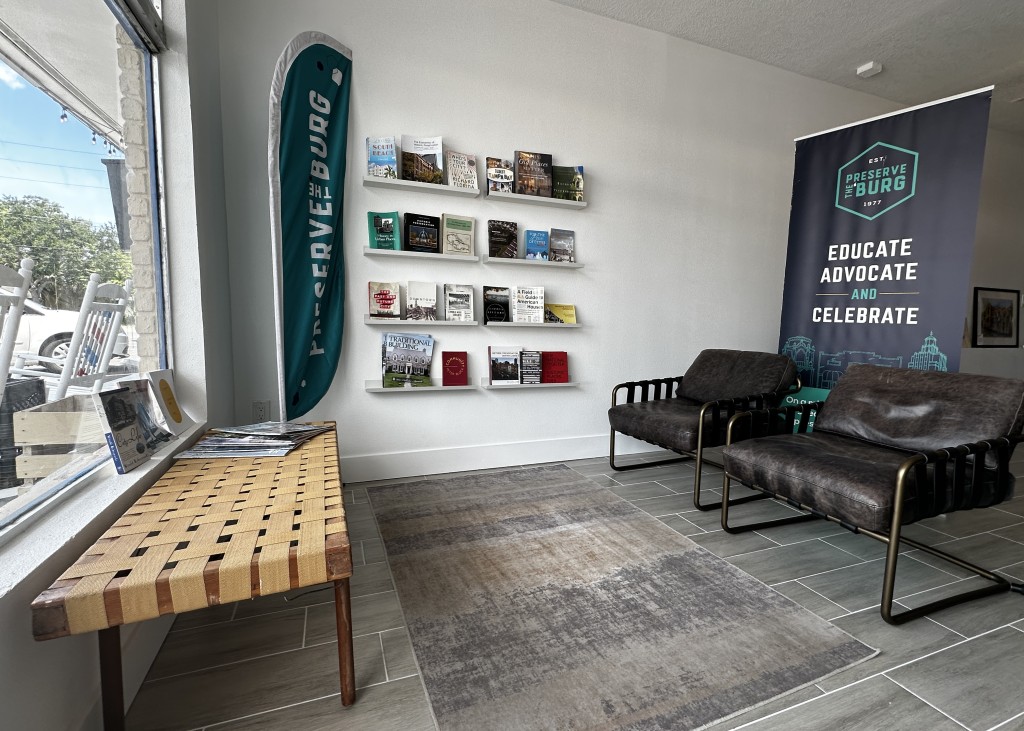
Preserve the ‘Burg celebrated a significant milestone recently, opening a location in the Warehouse Arts District that will be its first public-facing office, a small retail shop, a gallery, and an educational space.
For more information, go to Preserve the Burg.
To sign up for a walking tour, go to Walking Tour calendar
Author

Related Articles
Be aware the arts of March
CAMPGround 26, the Gasparilla International Film Festival, and Tampa Bay Design Week are some highlights.
Preserving Ybor City’s past, building for its future
The gut-and-rebuild renovation of Ybor City’s Scozzari Brothers Building includes meticulous preservation of the historic building’s façade.
Masthead gallery: Gasworx district construction
A photo gallery of construction at Gasworx, the 50-acre mixed-use district between Ybor City and downtown Tampa.