Preserving Ybor City’s past, building for its future
The gut-and-rebuild renovation of Ybor City’s Scozzari Brothers Building includes meticulous preservation of the historic building’s façade.
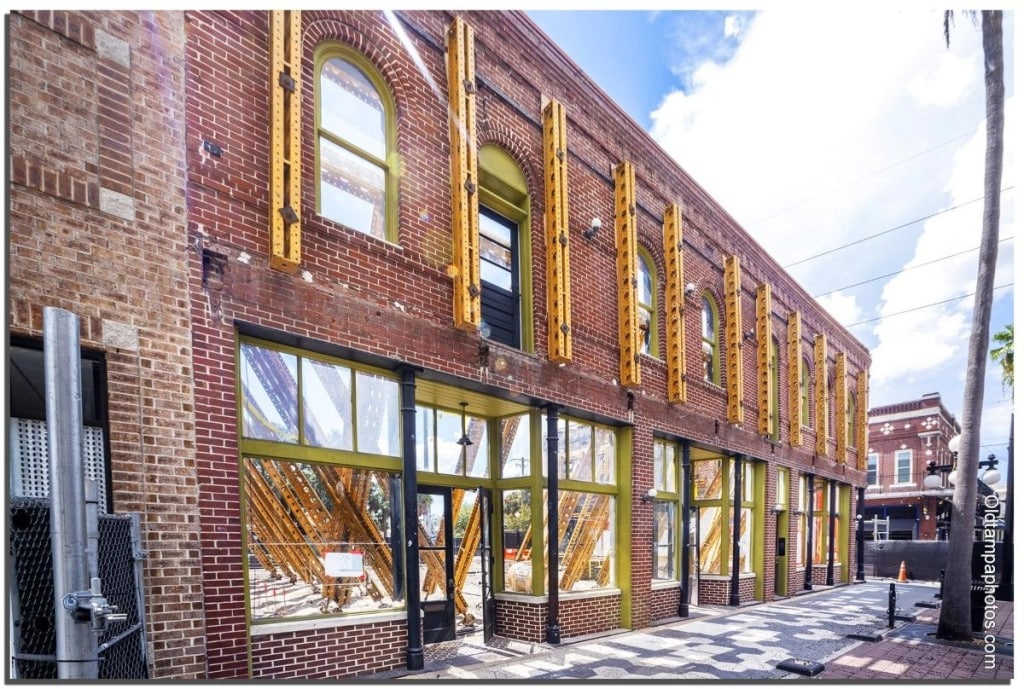
Along Seventh Avenue in Ybor City, the outside of the Scozzari Brothers Building remains the same while everything inside it changes. Built in 1905, the brick building at the corner of Seventh and 19th Street has housed local institutions like Ovo Cafe and La Tropicana, and was home to Blind Tiger Coffee Roasters’ first location.
Today, its historic façade and wraparound balcony, which once looked over a dense, noisy, cigar-rolling neighborhood, are being carefully held in place as the interior is completely gutted and rebuilt. For now, steel beams support the brick exterior while the future is built around and within it.
That tension between holding on and moving forward is at the heart of Ybor City’s ongoing evolution.
Amazing, challenging Ybor
For Charlie Garber, the investor and developer overseeing the Scozzari Brothers redevelopment, preservation is not a sentimental exercise. It’s expensive, bureaucratic, slow, and often frustrating. But it’s also essential.
“Historic preservation is key to maintaining an area’s history, culture and feel,” Garber says. “Done right, it can create and maintain a unique and amazing part of the city.”
Garber focuses much of his commercial real estate investment in Ybor City, a choice he says is personal as much as professional.
“I moved to Tampa, in part, because of Ybor,” he explains. “I’m frequently there during the day and at night and really appreciate how fun and different it is from the rest of the city.”
That difference, he notes, is also what makes Ybor challenging. Many of its buildings are aging, underinvested, and subject to historic review processes that add months — and money — to any redevelopment timeline. Even something as basic as replacing old single-pane windows requires approval.
“It adds substantial cost, bureaucracy, and time,” Garber says. “Nothing is quick. It forces it to be more of a labor of love and less of a profit or business decision.”
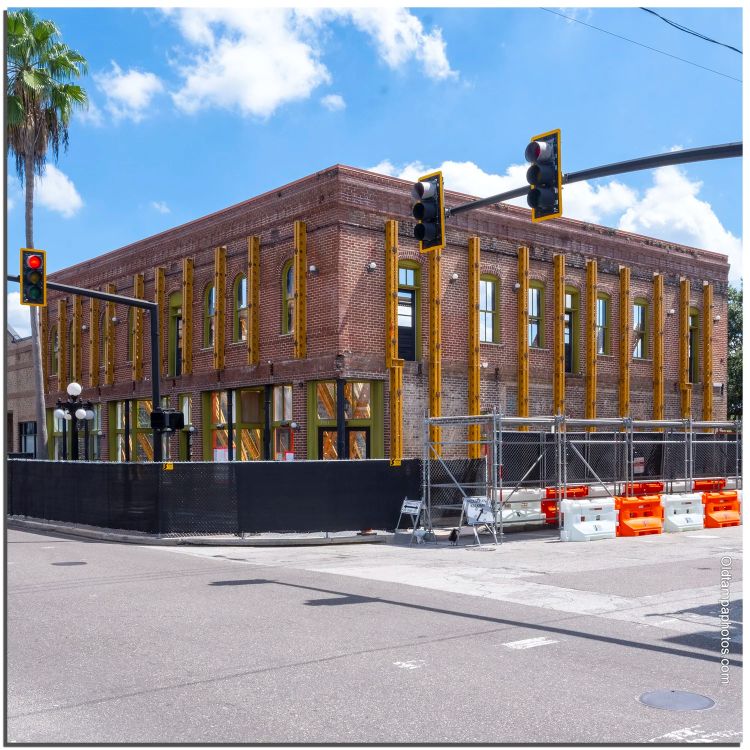
And yet, he’s pressing forward. The Scozzari project, slated to become a large venue with a rooftop restaurant, preserves only select elements of the original structure: the façade and balcony railings. Everything else is being rebuilt to modern standards, with the goal of extending the building’s life another century or two.
“Upgrading the building to stand another 100 to 200 years while looking like it fits into the historic neighborhood, all while delivering 21st century entertainment, is a very cool mix,” Garber says.
If Garber represents the future pragmatism of preservation, local photographer and historic preservationist Chip Weiner represents its memory.
Weiner has spent decades documenting Ybor and Tampa through historic photographs — drawing from archives like the Burgert Brothers collection, which dates back to the late 1800s, as well as newspaper photography from the Tampa Tribune and St. Petersburg Times, including the work of George “Skip” Gandy. His work isn’t about nostalgia for nostalgia’s sake; it’s about continuity.
Ybor, he often reminds people, wasn’t built as an aesthetic experiment. It was an industrial city, anchored by as many as 15 to 20 cigar factories at its peak. Its architecture emerged from function, labor, and immigrant enterprise, not from a desire to be charming.
Photography, in that context, becomes proof of life. A record that says this place mattered. This work happened here. People built lives, relationships, and memories inside these walls.
That perspective reframes projects like the Scozzari building. The value of preserving a façade isn’t just visual; it’s psychological. People attach themselves to places they recognize. When every trace of the past disappears, something harder to measure disappears with it.
Preservation, then, isn’t just about freezing time. It’s about maintaining a visual and cultural language that allows a neighborhood to evolve without erasing its face.
Garber understands that balance, even as he pushes against its constraints. His team has spent months figuring out how to literally build around the preserved façade, holding it upright while constructing the new interior behind it.
“The façade has been quite a project for us to preserve,” he says. “Not just holding it up, but building around the supports.”
The effort is part of a broader vision. Scozzari is one of several historic Ybor buildings Garber is redeveloping, with a five-year plan to renovate more.
Taken together, the work of people like Garber and Weiner reveals the real cost of preservation—not just in dollars or delays, but in attention. Forgetting is cheap. Remembering takes time, money, and intention, but it’s what ties us to our cultural identity.
Ybor City has always changed. Its industries rose and fell. Its streets shifted from production to nightlife, from factories to cafés and clubs. So the question isn’t whether it should evolve; it always has. The question is whether, in doing so, it will still look like itself.
At the Scozzari Brothers Building, Garber is working in painstaking detail to make it happen.
Author

Related Articles
Fast-growing Wesley Chapel gets new library
Wesley Chapel Library has already emerged as a community gathering place.
Tampa’s growth adds urgency to streetcar expansion discussion
Tampa leaders mull options for TECO Line streetcar extension that could shape future growth.
Partner Partner Content CDC of Tampa helps reach American dream of homeownership
CDC of Tampa’s innovative programs make housing affordable, attainable, and sustainable.