USF, Moffitt team up on study to help breast cancer survivors
Dr. Cecile Lengacher, a professor at USF College of Nursing, applied and received a grant on behalf of USF that will study how reducing stress in breast cancer survivors can improve concentration and memory that is often affected after chemotherapy treatments.
USF and Moffitt Cancer Center have joined forces in an effort to better the lives of breast cancer survivors. The team equipped with a $2.8 million grant from the National Cancer Institute (NCI) will begin a five-year study on how stress reduction can help repair the cognitive impairment of breast cancer survivors.
According to the American Cancer Society (ACS), more than 25-percent of cancer survivors suffer from a “mental fog” otherwise known as “chemo brain” after receiving cancer treatment. These cognitive impairments include trouble with memory and concentration, and can last from a few months to 10 years after treatment has ceased.
Dr. Cecile Lengacher, professor and pre-doctoral fellowship program director at the USF College of Nursing, applied for the NCI grant, and says previous studies she has been a part of show a correlation between stress reduction and clearing up this “mental fog.”
“During the study, we teach patients about yoga, breathing exercises and meditation techniques that they can use to help their concentration,” Lengacher says. “We also teach the patients to be mindful of the present, so if the mind wanders, we can train it to come back to the present — because when the mind wanders to unpleasant thoughts, or thoughts about their breast cancer experience, they can ruminate in those thoughts.”
Lengacher goes on to say that while they do not know how the stress reduction and mindfulness works to improve concentration and memory, research shows there is definitely something going on in the brain to repair the damage.
The study will look at 300 patients from Moffitt Cancer Center and the USF Health Morsani Center for Advanced Care.
Patients will be placed in three different groups: a mindfulness-based stress reduction (MBSR), control group and usual care.
“What is great about this is it’s not a pharmacological intervention,” she says. “The drugs don’t [always] work and they have side effects, so we are very excited about this approach, and proving it through this study.”
Author

Related Articles
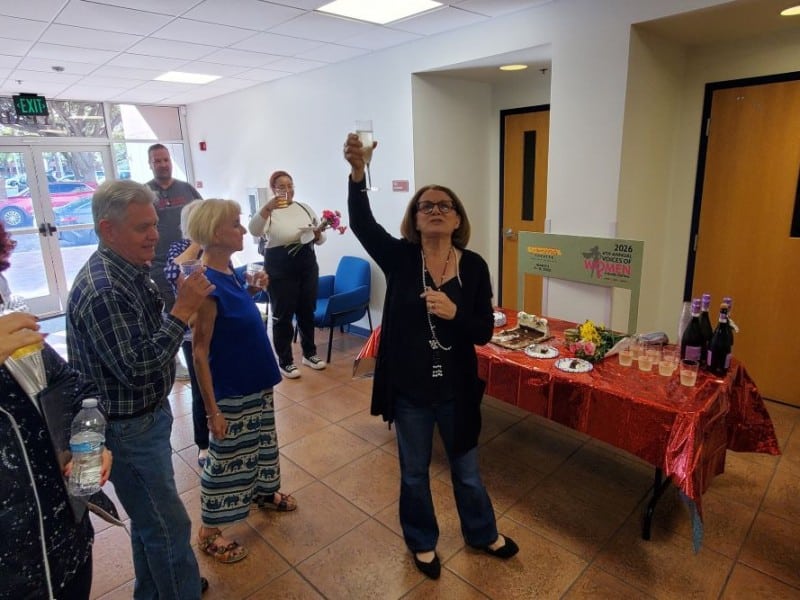
Powerstories Theatre founder, visionary Fran Powers steps back
Powerstories Theatre founder Fran Powers steps back as executive director after 25-plus years.

Partner Partner Content CDC of Tampa helps reach American dream of homeownership
CDC of Tampa’s innovative programs make housing affordable, attainable, and sustainable.

St. Pete restaurant roundup: Fusillo, Central Park open
Fusillo Italian Pasta, Central Park St. Pete, and SoDough Square opened recently.