Tampa City Council’s Naya Young looking long term for city, District 5
Tampa’s newest City Council member talks priorities for city, District 5
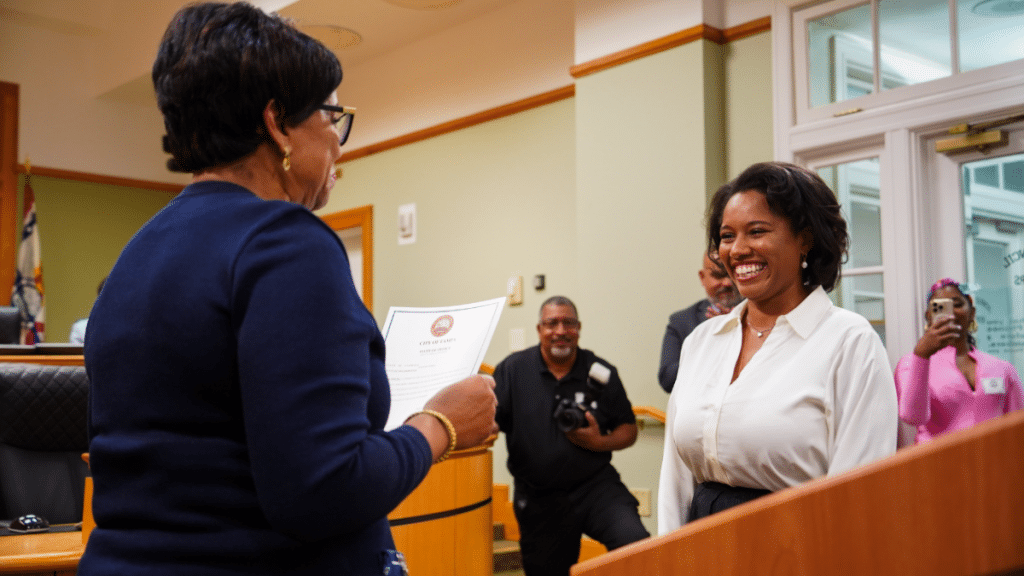
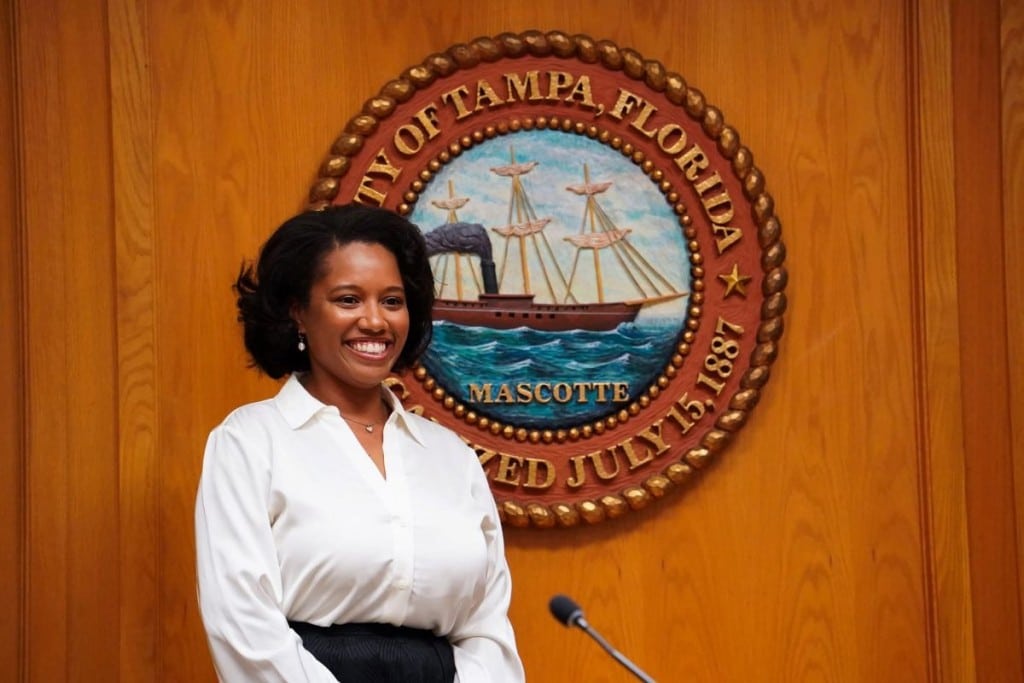
When Naya Young takes her seat at the dais at a Tampa City Council meeting, she often does something deceptively simple: she asks questions.
Not the rhetorical or grandstanding kind, but practical, sometimes uncomfortable questions that shed light on how city government works, where it sometimes stalls, and who gets left waiting when it does.
The newest — and youngest — member of the City Council, Young represents District 5, a sprawling area that includes East Tampa, downtown, Ybor City, the Channel District, and parts of Tampa Heights and North Tampa. It’s a district that includes long-established Black and brown communities that remain underinvested and underserved, even as development accelerates in other areas of the district and just beyond its borders.
Young knows that history well. Her approach to governance is rooted less in sweeping declarations than in collaboration, transparency, and a clear-eyed understanding of what city government can, and can’t, do on its own.
“We need to build rapport between staff and council…Recognizing that we have to work together, across agencies and entities, to actually make the city better,” she says.
Policy priorities
The emphasis on collaboration runs through Young’s priorities: youth empowerment, smart growth, economic development, and strong neighborhoods. When pressed to name the most urgent challenges facing District 5, she points to two intertwined issues.
First, bringing young people into the civic fold, not just symbolically, but meaningfully.
“Mentorship opportunities, celebrating students, creating real pathways,” she says.
That includes expanding city-sponsored internships, apprenticeships, summer programs, and Parks and Recreation after-school care, especially for youth and young professionals who too often fall through the cracks between school and work.
Second, affordability in a city where housing costs outpace wages for many. Young is blunt about the trajectory she sees Tampa on.
“All of our single-family neighborhoods are rapidly becoming exclusively for rich people,” she says.
That trend pushes out longtime residents, leaving them with fewer choices for housing.
Young sees zoning reform as part of the solution. Friendlier policies toward accessory dwelling units (ADUs), duplexes, and small-scale infill development could allow longtime residents to stay in their neighborhoods rather than rising costs driving them to the exurbs, where they have a tiring commute.
Young says there has to be room for both small and large developers.
That means not only accommodating major projects, but nurturing a new generation of homegrown developers through better training, clearer permitting processes, and easier municipal approvals for modest, neighborhood-friendly projects.
That philosophy extends to transportation and land use, where Young has emerged as a consistent advocate for smarter, more coordinated planning. She’s been closely aligned with fellow Council member Lynn Hurtak on transit initiatives like HART’s Route 1 pilot, which demonstrated that more frequent service—even with fares reinstated—can remain attractive to choice riders.
“People are really starting to see the importance of transit,” Young says. “Through demonstration projects, through micro-instances—people are feeling the pain of not having options.”
Perhaps no project better captures Young’s long-term view than the Green ARTery, a planned 22-mile multi-use trail connecting roughly 20 central and East Tampa neighborhoods. Her connection to the project is deeply personal. As a teenager, Young and her grandmother, community activist and organizer Lena Young-Green, canvassed door-to-door at homes along the proposed route, advocating for a vision of connectivity and investment that felt distant at the time.
“Things take time,” she says. “But when they come together, it’s incredible.”
For Young, the Green ARTery isn’t just about transportation. It’s about public health, access to nature, and linking neighborhoods that have long been physically and politically disconnected.
That same sensibility shapes her definition of success in office. It’s visible in places like Robles Park, where youth programs fill the summer with football, cheerleading, and activity, and continued investment could expand youth programming to coding, music, photography, and outdoor education.
It’s also visible in her push for deeper collaboration among the city, Hillsborough County, and regional partners, and a commitment to civic participation that encourages residents to show up, ask questions, and hold leaders accountable.
Young’s experience beyond Tampa includes advocacy work on community policing while living in Washington, D.C.
In a city sometimes growing faster than its systems can manage, Young’s approach is deliberate and earnest, with a focus on building capacity in government, neighborhoods, and the next generation.
For District 5, that may be what real progress looks like.
For more information, go to Tampa City Council
Author

Related Articles
Improv community rallies around Ybor City’s Countdown festival
After Countdown Improv Festival co-founder Justin Peters was diagnosed with brain cancer, the improv community stepped up to make sure the show goes on.
Tampa Bay back-to-school supply drives, giveaways
Back-to-school supply drives and giveaways provide crucial resources to the Tampa Bay region’s economically disadvantaged students and families.
July arts: “Predictor” at Powerstories, “Art in the Air” in Westshore, Tampa Archives Awareness, more
A look at the arts events and exhibits around Tampa Bay in July