Tampa Bay Muslims celebrate Eid-ul-Fitr, the end of Ramadan
Eid-ul-Fitr, the three-day festival marking the end of the holy month of Ramadan for Muslims around the world, began March 30th. It's a time for family and friends to gather over good food, tasty sweets, and time-honored traditions.
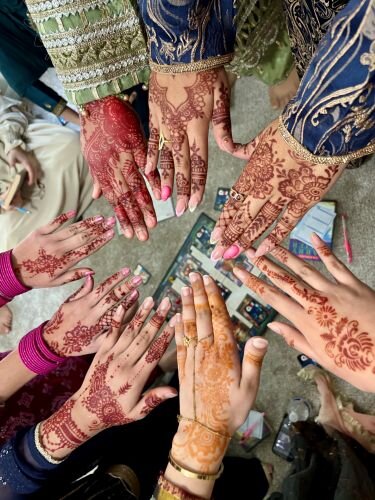
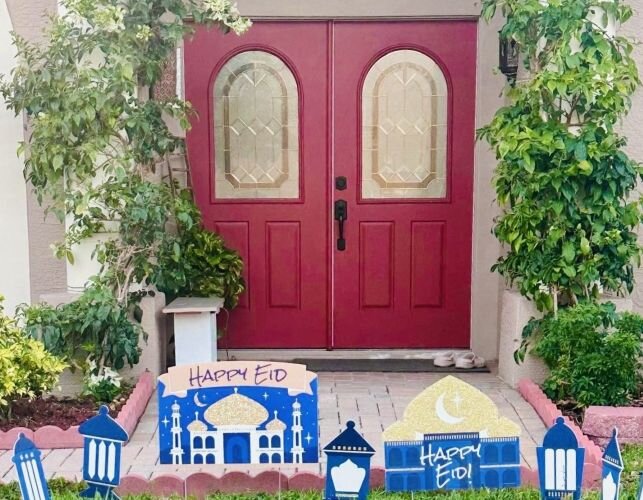
Whether you notice the colorful, beautiful outfits first, or the intricate, gorgeous Henna tattoos adorning hands, Eid-ul-Fitr will grab your attention. The celebration, which began on March 30th, marks the end of the holy month of Ramadan for Muslims around the world. Eid means “festival” or “feast” in Arabic. Fitr means “breaking the fast.”
The three-day festival is a time for family and friends to come together over amazing food, sweets, and traditions. The day begins with congregational prayers, followed by charitable donations for those in need.
Eid in Tampa
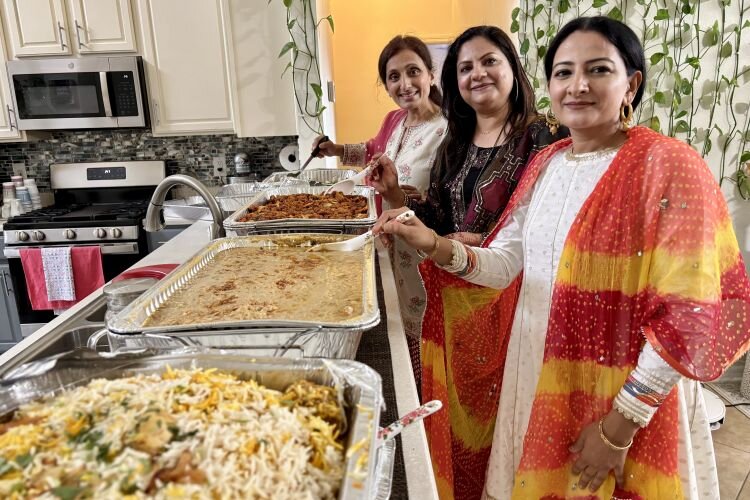
Tampa’s Sabeen Hasni, Sadia Farrukh, and Naila Khan came together for Eid (rhymes with deed) along with fellow Pakistani friends. A lunch party with the three friends and a half dozen other families had a full house of about 50 celebrating, exchanging gifts, and giving money to children – a Pakistani tradition.
A delectable feast of Pakistani dishes with butter chicken, goat, and beef entrees, haleem, a combination of lentils with beef, and much more made up the lunch menu. Then there was the dessert line-up. Sheer khorma, vermicelli in milk garnished with pistachios and almonds, is a Pakistani favorite for Eid. Mornings usually start with the sweet delicacy and it is enjoyed throughout the day. There was gajar ka halwa, yummy carrot fudge, and kheer, scrumptious rice pudding.
For Hasni, Eid is always nostalgic.
“My earliest memories of Eid are images, sounds, tastes, and feelings that mark some of the most special moments of my life,” she says. “My parents buying us new toys, delicious sweets, new clothes, and of course being with loved ones and family – all these fill the canvas of my childhood in rich colors, which appear as vivid in my mind’s eye now as they did then.”
Hasni remembers her childhood anticipation and excitement.
“The night before Eid day especially sparkles in my mind, bright and colorful, from stacks of bangles shimmering, under the lights on the mirrored walls of tiny shops,” she recalls. “I remember distinctly the pleasant scent of henna as my mom drew it out in florals on my tiny palm, dipping the toothpick into a pot of henna she had mixed herself. I remember how excited my brother and I would be about the presents and many clothes we would get for Eid. Standing here today, decades later, Eid is still supposed to be a time for all the good that life offers, its abundance defined by gratitude of the receiver, rather than in any absolute measure of what ‘a lot’ is. Eid will always be a time to be grateful and think of others in need before myself, just like I saw my parents do, putting my brother and me first, and always helping others they saw with limited means. Today, I am blessed to celebrate it with special friends and family; blessed to have the means to enjoy it, and, hopefully, play a small part to make a difference for the better in our world.”
Farrukh and Khan share similar sentiments.
“The real meaning of Eid is to cherish Allah’s blessings and share our happiness with family and friends,” Farrukh says. “The key is to remember those who need our help the most.”
For Khan, the festival brings a sense of community and kindness.
“Eid is about joy, togetherness, and gratitude,” she says. “The sense of unity and generosity—whether through giving gifts, sharing meals, or helping those in need—makes it a truly special occasion.”
Eid-ul-Adha, the second annual Islamic holiday, will follow in two months and ten days. It is celebrated to mark the end of Hajj, the annual pilgrimage to Mecca.
Related Articles
Darryl Shaw plans mixed-use project in East Ybor
For his next project, the Ybor City developer turns his attention east.
Saddlebrook’s transformation signals new chapter for fast-growing Wesley Chapel
Saddlebrook’s ambitious renovation project strengthens local economy, preserves sense of place.

Take a Tampa adventure with local artist Mishou Sanchez
The local artists’s coloring book, “Poppi Pink’s Tampa Adventure,” explores the city through a pop-surreal lens.